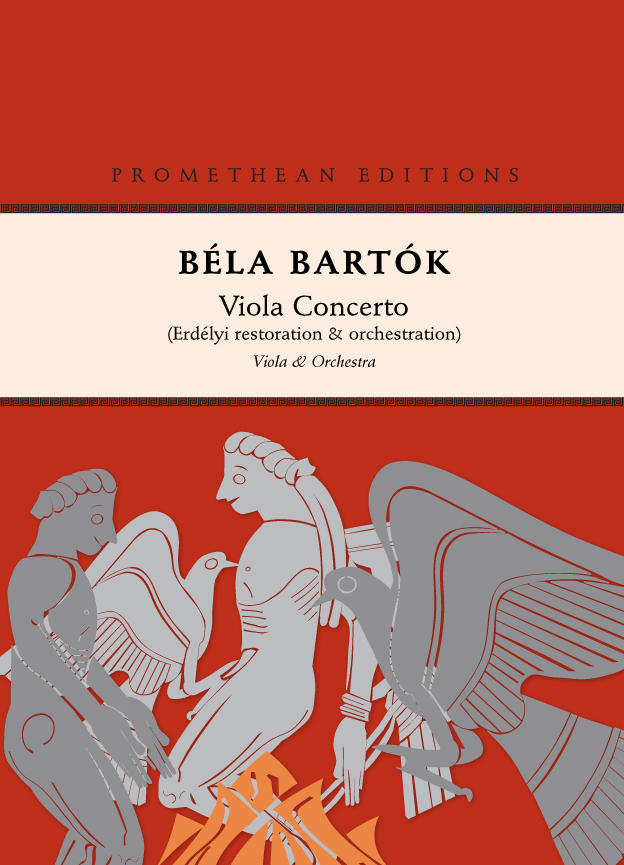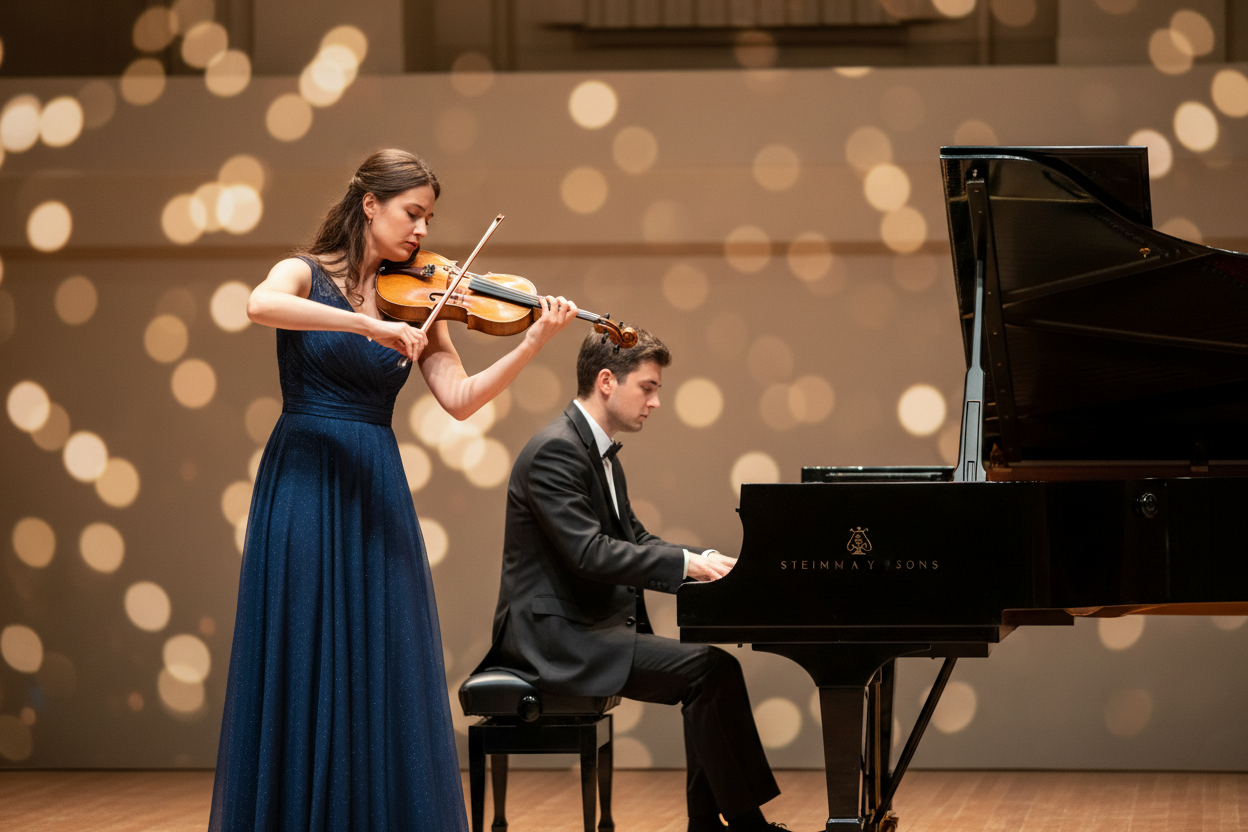
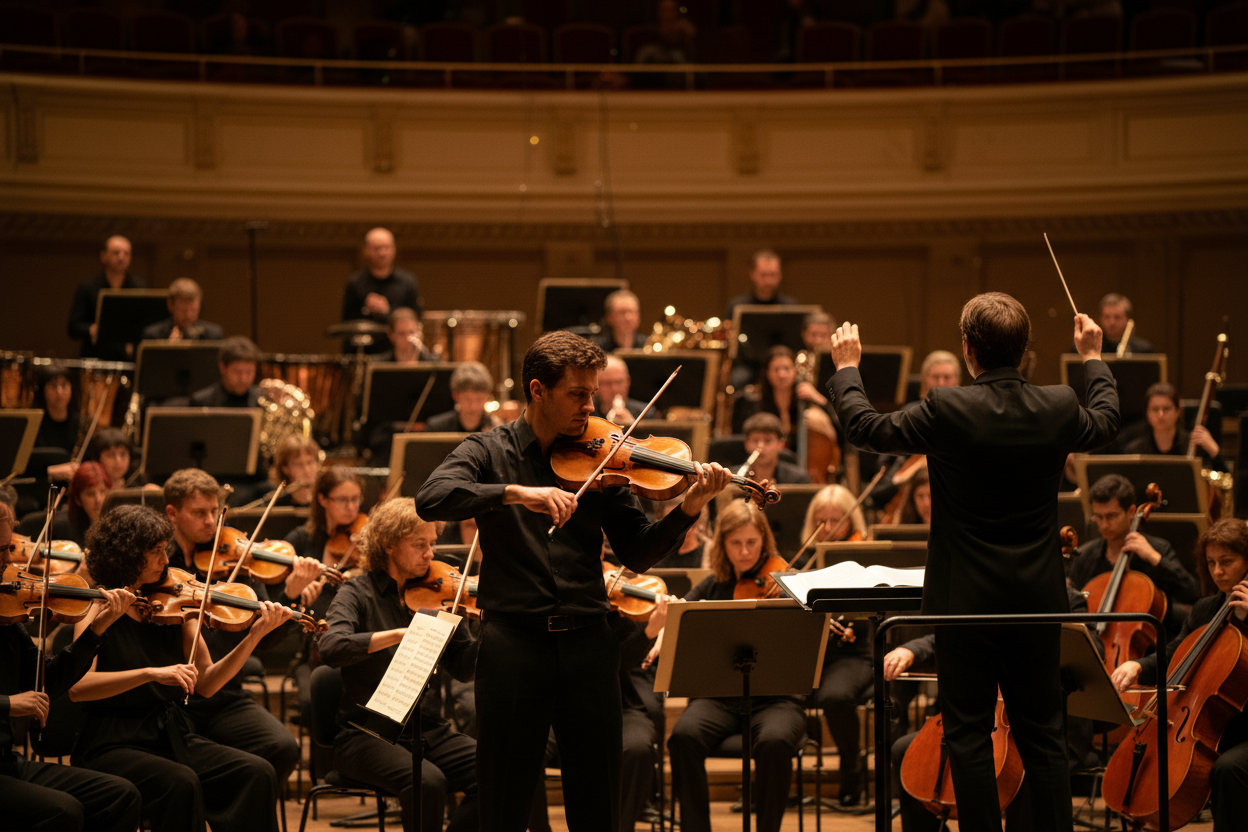
Bartók's Viola Concerto was commissioned by the famous Scottish violist William Primrose in early 1945, the last year of Béla Bartók's life, when the composer was already severely ill. Although this was the first time that Bartók had chosen to compose for solo viola, the viola parts in all his string quartets – which demand the highest level of technical accomplishment from the violist – bear witness to his ever-creative understanding of the instrument's special character and sonority. Inspired by Primrose's artistry, Bartók conceived of the viola as becoming the virtuoso-expressive vehicle for a new vision in music he had not perceived before. The solo viola is identified with the human being at its highest vantage point, looking through the gateway between life on Earth and eternity. While the Piano Concerto No.3 – which he worked on simultaneously – was a peaceful offering to his wife, the Viola Concerto sounds strongly autobiographical.
In his mind, Bartók held the Viola Concerto complete, and he began to write a carefully considered draft on the loose pieces of manuscript paper he had at hand. The draft is written in the form of a piano reduction, sometimes expanded to three or four staves for clarity in contrapuntal passages, and occasionally with names of the instruments that he had in mind for the orchestration. Most of the first movement and the long orchestral interlude in the third movement are written out in considerable detail, but throughout the rest of the score we can sense the composer's urgency in completing the viola part with a skeleton accompaniment which he would later have elaborated.
It is to our lasting regret that Bartók did not have the time to prepare the score in his customarily meticulous manner. His illness rapidly consumed him, and he died on 26 September 1945. The remaining draft of the concerto contains all the essential messages of the music but leaves us without any indications of tempo, dynamics, phrasing or articulation – much like the music of Bach and the centuries before him.
Following Bartók's death, Tibor Serly, a compatriot friend and fellow composer, undertook the difficult task of deciphering the manuscript and preparing it for performance. Both Serly and Primrose worked together to prepare the score which Boosey & Hawkes published in 1950. We owe them a debt of gratitude for their faith in the importance of this masterpiece. The Viola Concerto, initially dismissed as an unfinished sketch, has become a staple of the viola repertoire.
My motivation in undertaking this critical restoration was the discovery that the Boosey & Hawkes publication contained many divergences from Bartók's manuscript. Whilst we have no power to bring Bartók back to give us his definitive version, I believe we must follow as closely as we can the notes he did write. What remains is a very powerful and concise concerto, the "swan-song" of Béla Bartók.
The choices of instrumentation presented in this score evolved over a period of ten years. I have studied all of Bartók's works involving orchestra, examining the first drafts of many of these and immersing myself in the composer's process of orchestration. In the Viola Concerto I see thematic links to such earlier compositions as the Violin Concerto No.1, Bluebeard's Castle, The Miraculous Mandarin, Dance Suite, Rhapsody No.2 for violin and orchestra, Cantata Profana, String Quartet No.5, Music for Strings, Percussion and Celesta, Violin Concerto No.2, Concerto for Orchestra and Piano Concerto No.3. All these works, even the string quartet, have had some particular influence on my orchestrating the Viola Concerto.
During those ten years I made a number of variants of the score, and I am grateful for the support of several conductors and orchestras who kindly gave me a great deal of rehearsal time and the incomparable opportunity to try out different ideas of instrumentation which were performed, recorded and evaluated. By the time I gave the public world premiere of my orchestration at the International Viola Congress in Wellington, New Zealand in 2001, the score was virtually finalised – the last fine details were chiselled out during proofreading for publication in 2004.
I gratefully acknowledge the invaluable suggestions I received in preparing this restorative edition from Professors László Somfai and Elliott Antokoletz, Bartók experts of the highest international acclaim, as well as the eminent Hungarian composers György Kurtág and Péter Eötvös. I also wish to express my lifelong gratitude to Professor László Dobszay, my first guide to the essence of Bartók's music: "only from pure source".
Csaba Erdélyi