Ralph Vaughan Williams is recognised as one of the major musical figures of his time. He began his career as a folk song collector, music editor of The English Hymnal (1906) and founding conductor of the Leith Hill Festival—a post he maintained for over fifty years. Vaughan William's vast musical output includes song settings, symphonies, chamber music, opera and choral music. At the heart of his creativity lie a sequence of nine symphonies that move from meditative pastoral music to themes of existential dramas.
Ralph Vaughan Williams, a descendant of the Darwins and Wedgwoods, was born in Down Ampney, Gloucestershire, on 12 October 1872. He was educated at Chaterhouse, the Royal College of Music and Trinity College, Cambridge. His composition teachers included Hubert Parry, Charles Wood and Charles Villiers Stanford. He also studied with Max Bruch and Maurice Ravel, and enjoyed inspirational musical friendships with Gustav Holst and George Butterworth. He married Adeline Fisher in 1897 and, after her death, married Ursula Wood in 1953.
Vaughan Williams began his career as a folk song collector, music editor of The English Hymnal (1906) and founding conductor of the Leith Hill Festival—a post he maintained for over fifty years. His reputation as a composer was established in 1910 with performances of A Sea Symphony (1909) and the Fantasia on a Theme by Thomas Tallis (1910). After the premiere of A London Symphony (1913), Vaughan Williams enlisted with the Royal Army Medical Corps, serving in France as a wagon orderly. In 1919 he was appointed to the staff of the Royal College of Music and in 1921 became conductor of the Bach Choir. He was awarded the Order of Merit in 1935 and was recognized, even revered, as the major musical figure of his time. He died on 26 August 1958. His ashes were buried in Westminster Abbey.
Vaughan Williams’s vast musical output includes song settings of Housman, Stevenson and Whitman; The Lark Ascending (1920), an iridescent orchestral miniature where the solo violin evokes a trilling lark rising above flat fields of ripening corn; Sancta Civitas (1923-25), an oratorio remarkable for the visionary precision of its expression; the opera, The Pilgrim’s Progress (1951), the last of several Bunyan-based settings (the first of which is published as PME14); and Riders to the Sea (1925-32), an operatic rendition of J.M. Synge’s play set against the unforgiving landscape of the Aran Islands. At the heart of his creativity lie a sequence of nine symphonies that move from the meditative pastoralism of the third (1921) and fifth (1938-43) to the louring existential dramas of the fourth (1931-34), sixth (1944-47) and seventh (1949-52); the ninth (1956-57) is played against the tragic backdrop of Hardy’s Tess of the d’Urbervilles. Vaughan Williams’s first dramatic response to Hardy is music for The Mayor of Casterbridge published as PME13.
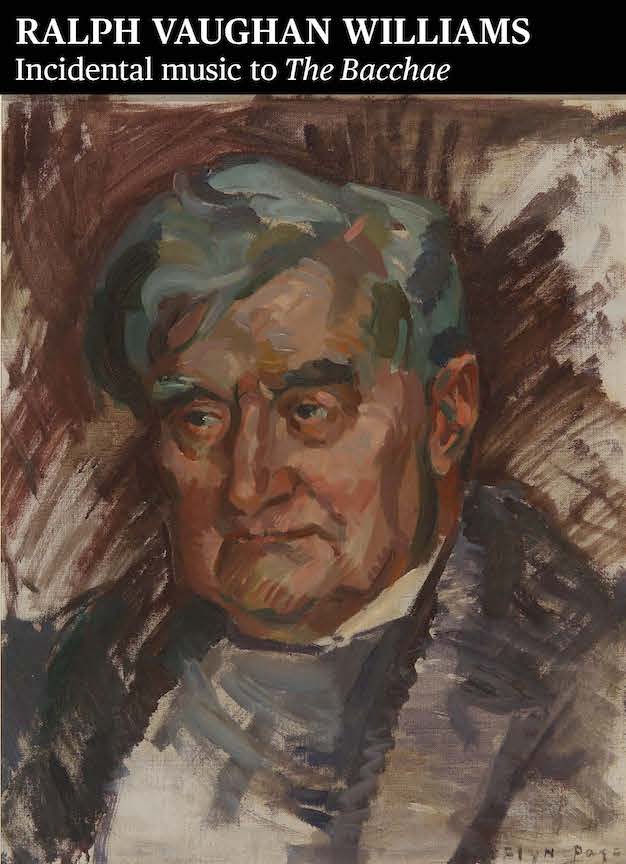
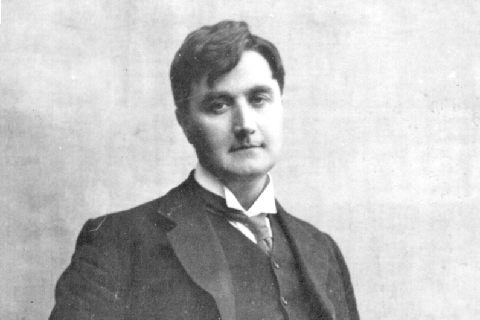
Photo credit: Ralph Vaughan Williams, ca. 1910, courtesy and copyright of The Vaughan Williams Charitable Trust
Our published editions have been edited and engraved in accordance with Promethean Editions’ exacting house style, with full biographical details of the composer, programme notes and performance instructions. Performance Scores have been designed to perform from; Performance Sets include a score and performance material; and Performance Parts only incude the performance material.
Works are also included in our ever popular series for younger performers.