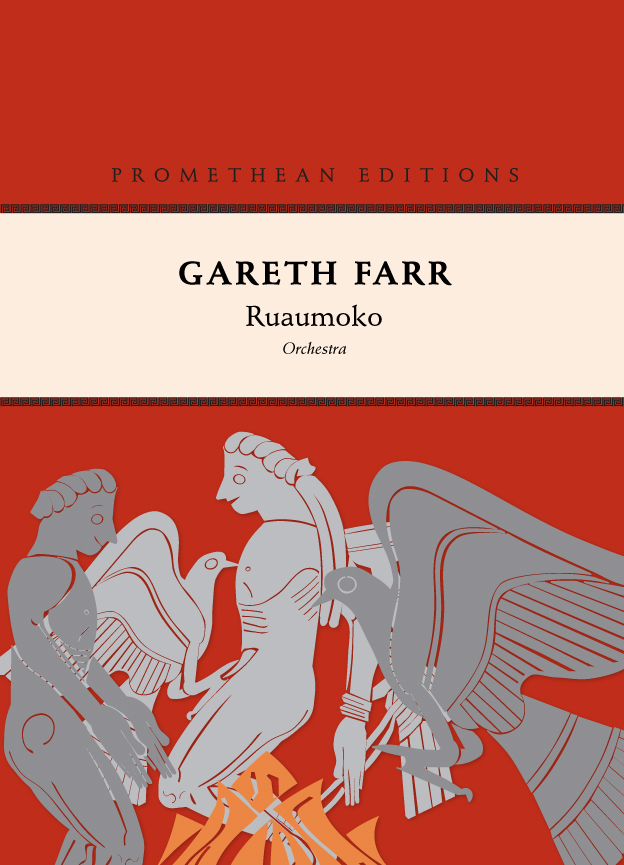
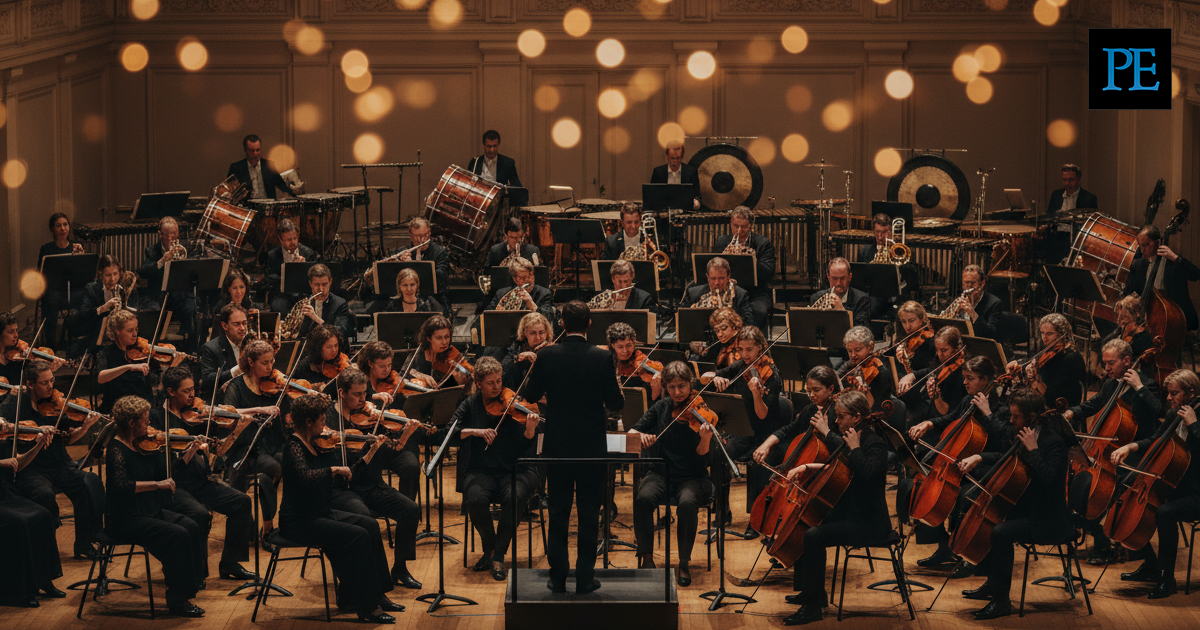
Based on the story of the Maori god of earthquakes, Rūaumoko sees Farr channeling the elemental forces of nature across four movements based on the four seasons. Connecting the movements are powerful percussion interludes. Tender woodwind playing dominates the sweet, airy Te Ngahuru (Autumn), while Te Takurua (Winter) is consumed with perilous swirling contours and booming percussion punctuated with staccato brass. The mysterious Te Kōanga (Spring) features an eerie piccolo line that gives way to chiming pitched percussion and surging brass drones. The final movement, Te Raumati (Summer), has the choirs of the orchestra interlocking to create a propulsive rhythmic tapestry that erupts into a triumphant finale.
Rūaumoko, god of earthquakes, was the youngest son of Papatūānuku, the Earth. When Papa and Rangi (his father, the sky) were separated, he remained unborn in Papa's womb. From his subterranean dwelling he would shake the body of his mother, and in doing so cause the seasons to change. Together with Hinewera, the goddess of fire, he celebrates the birth of the new through the destruction of the old.
In the autumn (Te Ngahuru), Rūaumoko turns over in the Earth to bring the cold to the surface. With a great rumble, Te Ngahuru becomes the fierce storms of Te Takurua, the winter. Following another stupendous roar of the earth, the temper of the storm melts into the calm of Te Kōanga, the spring. Rūaumoko turns and brings the warmth once again, and with a final trembling clatter, the summer (Te Raumati) bursts through to shine down upon the earth and complete the cycle.