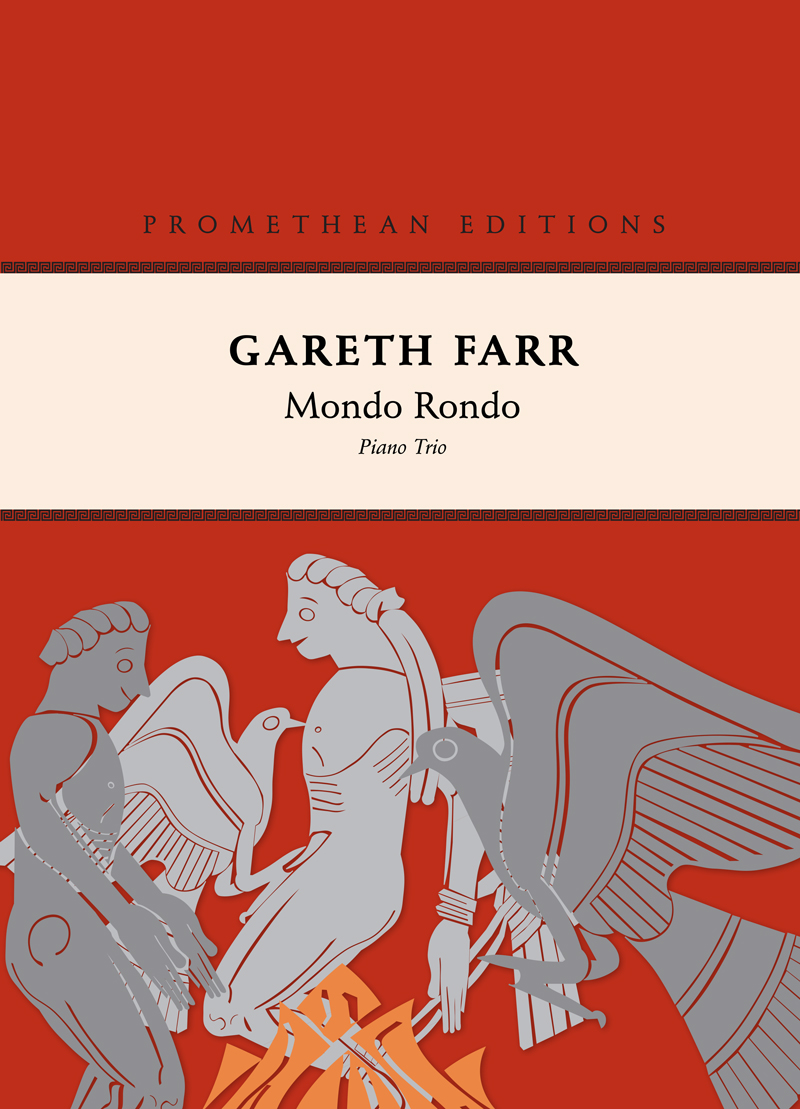
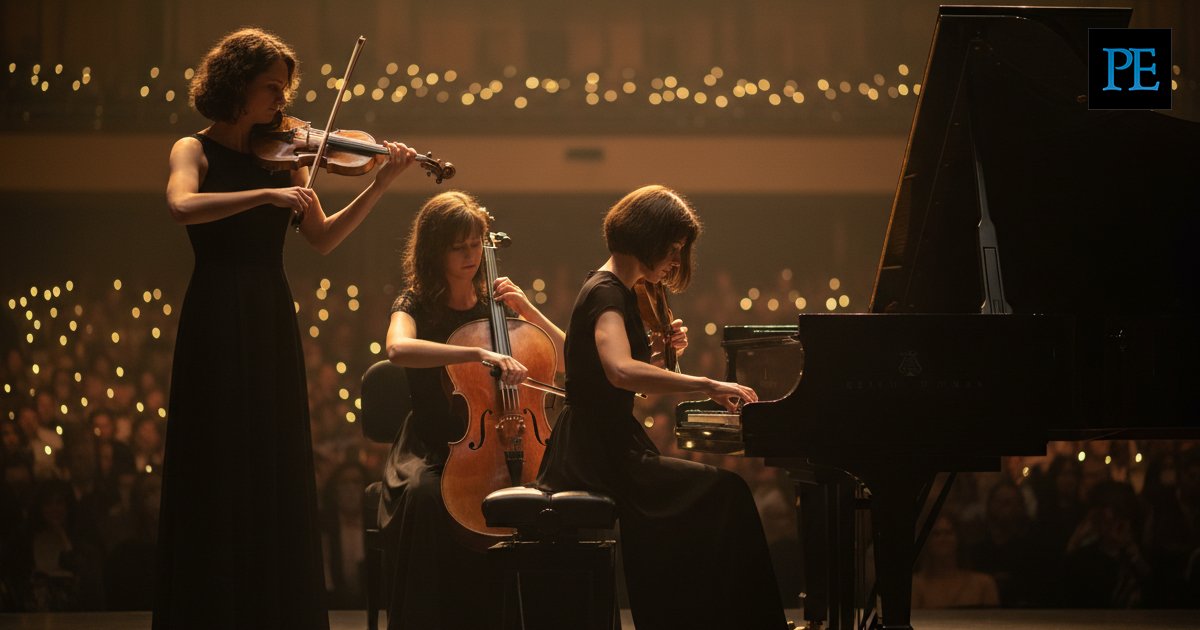
Mondo Rondo was originally written in 1997 for string quartet (PE033). This edition is an arrangement by the composer for piano trio.
Mondo Rondo's three movements are quirky, clever and full of character, with each movement managing to create a unique sound world within the space of a few minutes. Although the title of the first movement gives a nod to the rondo form found in classical music, it does not stay true to this form for its entirety. Among the patchwork of oft-repeated themes and new ideas interspersed between comically inappropriate cadences, Mondo Rondo contains material from which the following two movements are derived. The movement's sudden dynamic changes and quick switches between pizzicato and arco playing provide an exciting and energetic challenge for the string players. The crisp timing of the ensemble will be displayed as it comes together for Mondo Rondo's unified rhythmic statements before splintering off once again into independent quick-fire call-and-response material.
Mumbo Jumbo begins as a study in pizzicato, and Farr employs the technique of hocketting, whereby the tune is built up from a few notes contributed by each instrument in turn. The piano mimicks the pizzicato sound by muting strings inside the piano. The overall effect is quite unusual, suggestive perhaps of the sound of the m'bira (African thumb piano). This opening demonstrates that Farr's love of writing for percussion can manifest itself in almost any instrumental setting. Of the three movements, Mumbo Jumbo contains the most integration of extended playing techniques, employing snap pizzicato in the strings, tapping on the instrument bodies and damping inside the piano. With these techniques presented as interlocking beats within the movement's hypnotic sound world, the players have a piece of music that showcases the range of sounds available to the trio in dynamic fashion.
The third movement, Mambo Rambo, opens with a repeated emphatic statement before settling into a layered groove grounded by the violoncello. All players have an opportunity to embrace fervent melodic lines as the accompanying roles are passed throughout the ensemble. The middle section showcases fast fingerwork that switches between accompaniment and foreground, racing by in bursts of fortissimo or scurrying along in tense whispers. The main theme returns in harmonic planing chords above an enriched violoncello groove to end the work.