
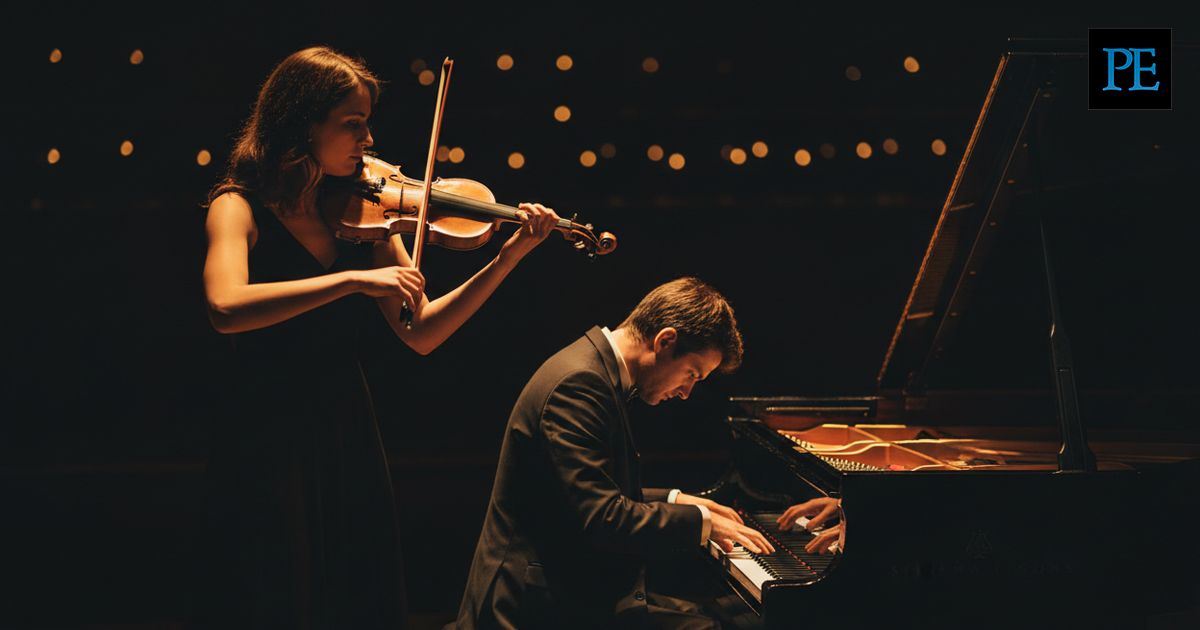
Meditation expresses thoughts of nature and beauty through the utilisation of simple ideas based on modes, ostinati, and the juxtaposition of long melodic lines and shorter motifs. It is structured in three sections which are differentiated by their tempos – slow, faster, slow – with each transitioning fluidly without a break in the sound. The pianist uses yarn mallets directly on the strings to open the work with an ostinato. The three pitches of this ostinato act as a cell from which other ideas germinate. The violin introduces two contrasting motifs - a soaring high line and a rising staccato fragment – before taking over the ostinato figure. This allows the piano to emerge with a symmetrical progression, inspired by the unfolding of a flower. The rhythmic staccato fragment is incorporated and leads to a short climax. An accelerando is interrupted by a more personal, romantic motif which is based on the opening three note cell. The faster middle section features lively and playful themes on the violin accompanied by offset ostinatos in the piano. A significant dissonance within the work occurs, where the symmetrical flower progression expands to a diminished octave, portraying an unsettling reminder of human fragility. The calm of the opening returns for the final section and echoes of earlier themes are suggested, akin to memories from the past. There is a sense of yearning and nostalgia, fused with an idea of oneness with nature.
The poem To P'ei Ti by Chinese poet Wang Wei (701-761) was the genesis of this work.