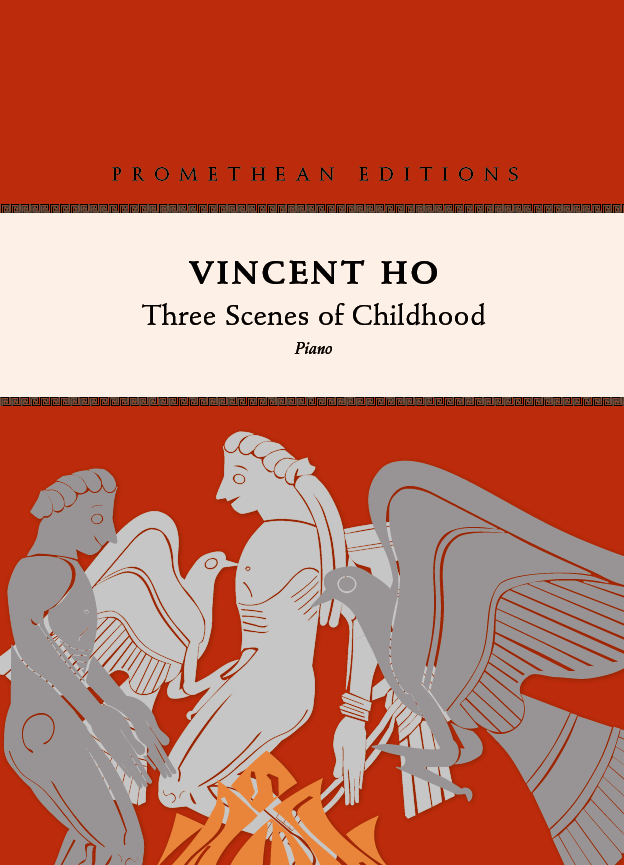
Though Ho's Three Scenes of Childhood is inspired by a day in the life of a young child, a formidable amount of skill is required to articulate the child-like qualities the composer evokes across the work's three movements. Rapid waves of chromaticism reflect the feverish busyness of play (Playtime), moods changing with the wind, while restless time signatures keep things tumbling forward. Fists and forearms are employed as little tempers flare (The Tantrum), while elsewhere respite is found in the drift of sleep (An Afternoon Nap), notes twinkling rubato-like in the piano's upper register.
Three Scenes of Childhood was written while I was a sophomore at the University of Calgary. During this time, my mother was working as a nanny, taking care of children aged four and under. On any given day, there would be at least one child in the house. After three years of this, I had grown accustomed to having babies around the house. This was the initial inspiration for Three Scenes of Childhood: watching children run around (Playtime), falling asleep or waking up (An Afternoon Nap), or simply being themselves (The Tantrum). The performance techniques that are used in The Tantrum (hammering the keyboard with palms and fists) were inspired by observing the children's first attempts at "playing" the piano.