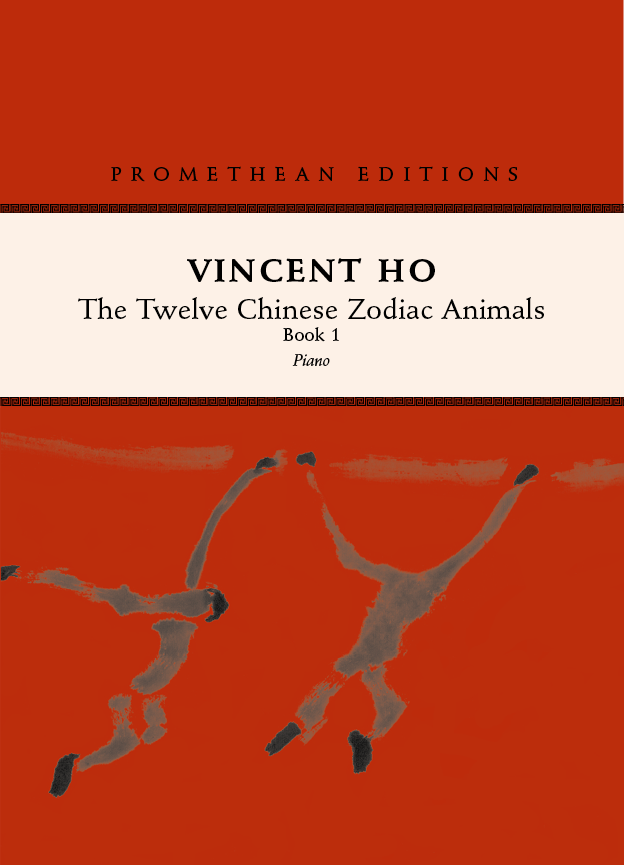

As my daughter was learning piano, I found there were few Asian-themed pieces in the repertoire series she was learning from – Royal Conservatory of Music Piano Series (RCM) – and even fewer that reflected Chinese cultural themes. That was when I decided to compose a book of twelve compositions for piano, inspired by the Chinese Zodiac animals, and tailored to the educational needs of students in Levels 2 to 7. To ensure I created sincere musical interpretations of each animal, I devoted much time to researching their legends, personality traits, and cultural significances (e.g. Rabbit – gentle, compassionate, and full of luck), as well as their distinguishing physical languages (e.g. Rabbit – swift hopping/jumping motions). This information was necessary in my efforts to capture their musical spirit and recreate their physical/gestural languages in pianistic form. In addition, I incorporated many sounds, harmonies, and performance techniques I had learned from my years of researching (and composing for) Chinese traditional instruments. As a way to appeal to young players, I approached these works as musical caricatures of each animal in their young ages.
I would like to express my deepest thanks and gratitude to Derek Chiu and Queenie Yang of the Royal Conservatory of Music for their input and critical feedback during the creation of this work, and to Elaine Rusk, Vice President of the RCM program, for her enthusiastic support. I also thank my daughter Claudia (age 8 at the time) who not only inspired me but had also served as my co-collaborator – her approval of these works was the critical test to their effectiveness and appeal for players at her level. Last but not least, I must thank Liz Parker for suggesting this idea to me in the first place back in 2017.