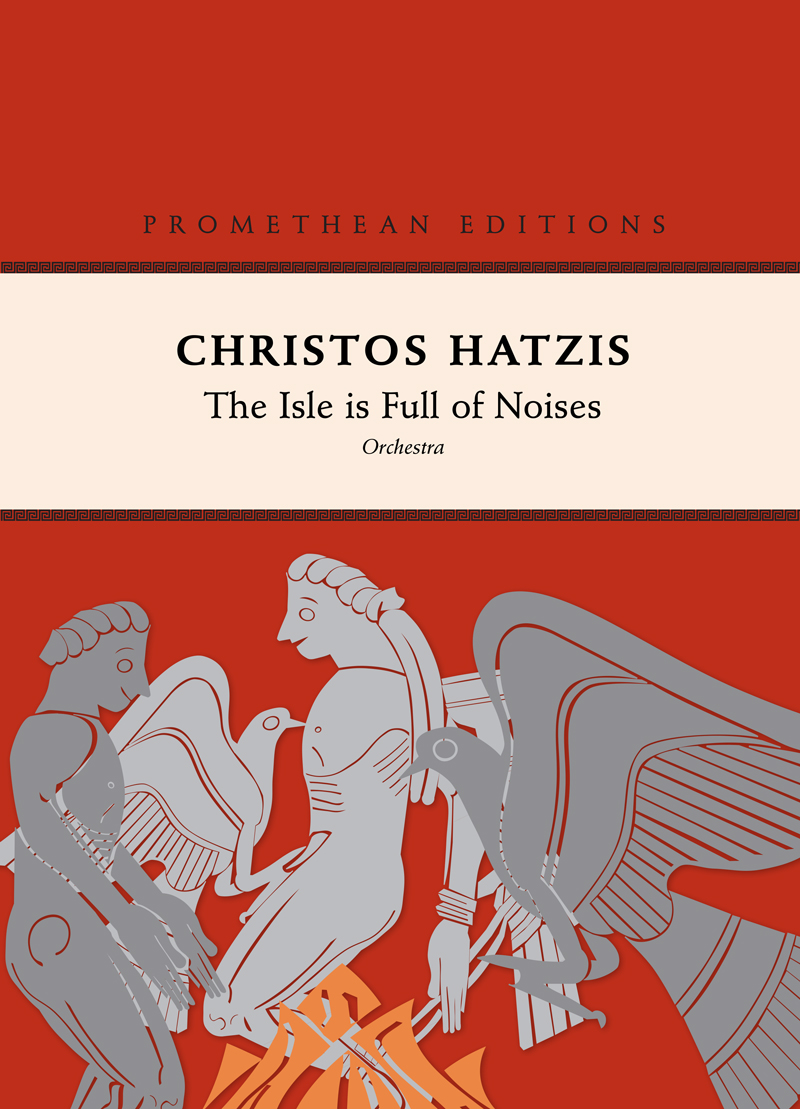
The Isle is Full of Noises was commissioned by l'Orchestre Symphonique de Montreal for a program consisting of compositions inspired by William Shakespeare. I chose to base mine on The Tempest, particularly on two memorable excerpts, one by Prospero: "We are such stuff as dreams are made on, and our little life is rounded with a sleep." (Act 4, Scene 1) and the following excerpt by Caliban:
"Be not afeard, the isle is full of noises,
Sounds, and sweet airs, that vie delight and hurt not.
Sometimes a thousand twangling instruments
Will hum about mine ears, and sometimes voices,
That if I then had waked after long sleep,
Will make me sleep again, and then in dreaming
The clouds methought would open, and show riches
Ready to drop upon me, that when I waked
I cried to dream again." (Act 3, Scene 2)
In The Tempest, both Prospero and Caliban view reality as dream-like. Their island is a magical place, its "reality" shaped and determined by human will – Prospero's, rather than natural law. Caliban, a rebellious and conceited creature, is promoting this reality to the unsuspecting newcomers, hoping to usurp Prospero's magic and power through them. It is not surprising that, in Christian Europe of Shakespeare's time, Caliban's character became associated with the serpentine deceiver of the Biblical Eden allegory, who also sought to corrupt the first humans by enticing them with the power of the forbidden fruit of consciousness and its power thereof, in spite of God's explicit instructions to the contrary (Prospero's character has many features in common with the Elizabethan concept of God.)
It is this Biblical connection with the "isle, full of noises" that inspired me to compose this work. The Eden allegory has been a subject that I continue exploring musically and psychologically in a number of recent works. At variance with current scientific orthodoxy, I sense a different psychological pre-history of our species and use the tools of collective memory – the same tools that enable me to compose music – to trace this prehistory to its deep roots. This task is frustratingly difficult, constantly bouncing against the "hard facts" of science, but my view of reality has gradually evolved to be more similar to the one that Prospero and Caliban weave for the other characters in The Tempest, than to the creeds of scientists – with the possible exception of some quantum physicists, whose view of reality is even more fantastic than anything Shakespeare or the Genesis authors could be accused of conjuring.
During the meditative process that composing has become for me, it occurred that it may be possible to view Western European musical history from the classical masters to the mid-20th century as a continual process of psychological regression, reaching ever deeper into our imaginal past. If this is true, the music of this musical tradition that we all cherish is the creative by-product of this regression: it is the sonic fruit of our search for our psychic roots. Consequently, the time arrow of western music during this period would be a mirror reflection (an inversion) of the time arrow of this imaginal history. Restored, it would start with relatively independent parts and end up with complex wholes, so, if we were to reconstruct a proper timeline, we would start with modernism and gradually evolve forward towards classicism. Bizarre as this may sound, it is, nevertheless, the stylistic timeline that I ended up following in The Isle is Full of Noises.
The work begins with primal breathing and an elemental soundscape. Musical sounds gradually emerge from the depths of the orchestral spectrum in a tonally vague language, quickly transforming into impressionistic smears reminiscent of Debussy, one of my favourite composers. Timbre gradually morphs into melody and harmony but both are elusive, initially retaining their identity, though only briefly. Finally, the main D-major theme – representing the emergence of consciousness in the metaphorical structure of this work – is introduced by the string orchestra in an introverted, but eventually more self-conscious, manner. This theme is persistently pulled outward by the exuberance of the work's triumphant ending, representing the emergence of the perfected human in this earthly sphere of consciousness. All of these musical metaphors were recognized as functioning archetypes in the music only after the completion of the compositional process, or near the end of the process. In retrospect, however, I realize that these archetypes acted as catalysts for the music all along and caused it to become what it is. One conscious influence was the music of Felix Mendelssohn, whose overture to A Midsummer Night's Dream I knew would precede The Isle is Full of Noises in the concert programme for its premiere performance. Any stylistic similarity between the latter part of my work and Mendelssohn's is therefore not coincidental. Then again, I subscribe to the view that nothing ever is.
In 13 minutes, and without a second of boredom, here is music that is both contemporary and accessible.
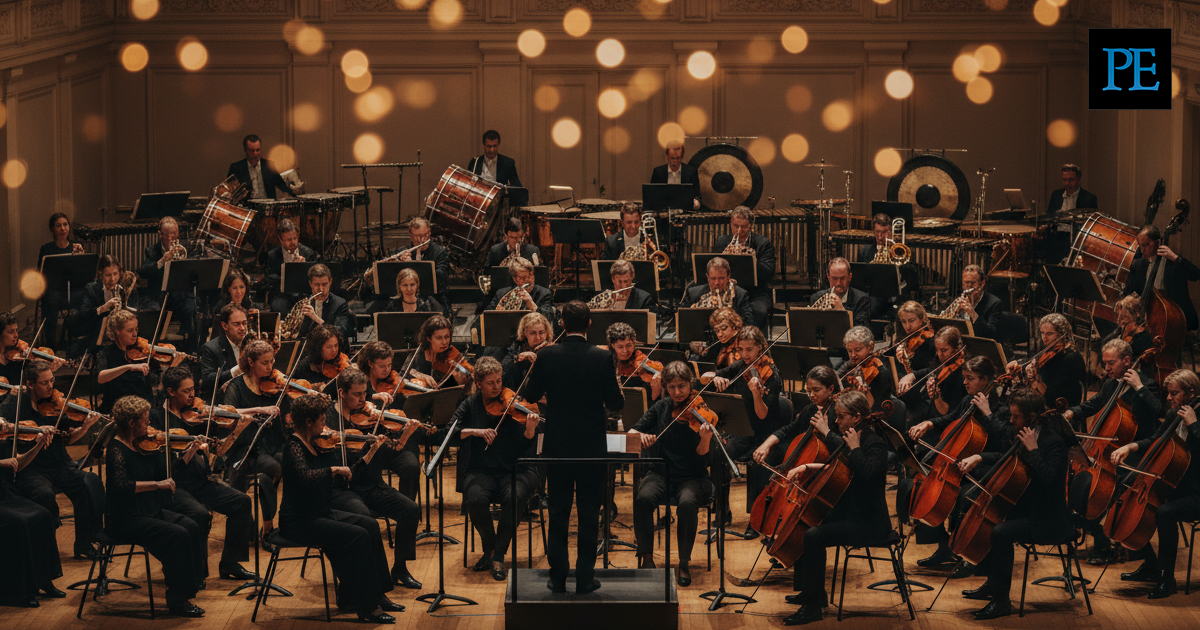
Sound transformations, significant participation of the wind instruments group with a determinating tuba solo, in combination with beautiful, breathing melodic lines, made this contemporary composition an exciting and accessible listening experience. It formed a perfect close to the first festival concert programme summarizing all the differences, sounds, timbres, melodies and harmonies of all styles and periods, mixed up in a melting pot of cultural, musical and philosophic traditions.