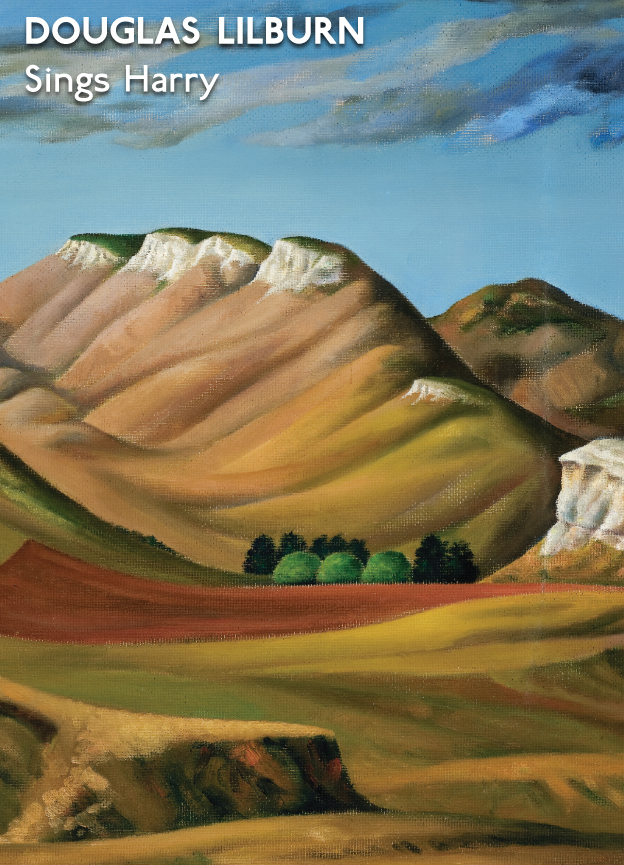

Sings Harry for baritone and piano is Lilburn's setting of six poems from New Zealand poet Denis Glover's sequence (1951).
Sings Harry captures the essence of what Lilburn most valued, and today one could speak of the cycle having acquired national standing. In these songs, Lilburn, relishing the dry enchantment of Harry's voice, invites us to perceive connections between the rural world of the farm and the archetypal man alone. Through Harry, he is able to explore the fundamental facts of existence in order to recognize the eternal truth and substance underlying that existence, as distinct from all its mundane distractions.
The single most important factor about Sings Harry is the determination by the poet and the composer to use the ordinary language of ordinary people, and to transmute plain New Zealand speech into shining song-poems. Both knew the language of farmers (who can't be fooled by rhetoric), but whereas Glover worked occasionally on high-country stations in his late teens, Lilburn, having grown up on a sheep station (and later working as a shepherd on his sister's farm, singing lustily as he rode the hills), could actually 'remember' the scenes that Harry sings of, and this informed his composition of the songs. The authentic vernacular of Harry's voice is what hooks Lilburn, inspiring him to create spare and direct tunes with accompaniments that are startling in their ability to bring the physical world of paddocks and shorelines into focus, reminding us of the beauty of the familiar world. So there is the voice, and the created landscape, and the constantly shifting skein of metaphors, and the wonderfulness everywhere you look, and from whatever angle you look.
Lilburn also arranged Sings Harry for tenor and piano (1953) and tenor and guitar (1954).
—Robert Hoskins