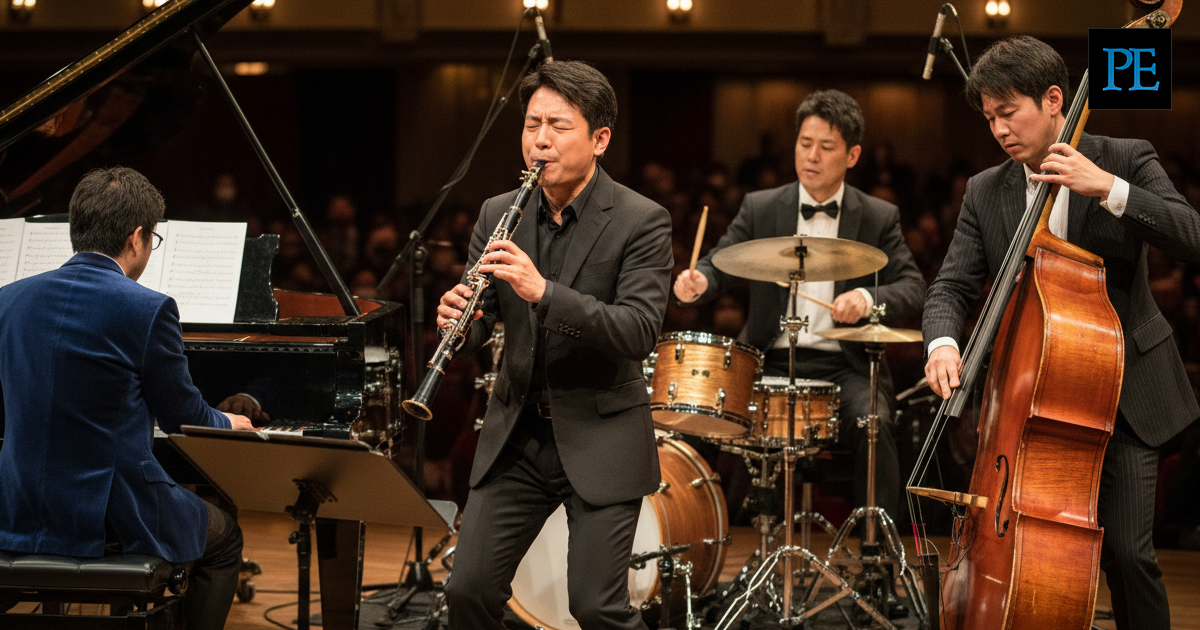
Russell Square, a quiet, unforced piece with close-knit part-writing and an underlying swing, is the earliest occasional work in this collection. It takes its name from the locale of Pruden's first London address during his studentship at the Guildhall. Robert Burch (then the composer's flatmate) recalls: "There were no clubs, nor was there 'clubbing' in those sedate days, although Larry's interest in jazz could well have led to his putting down musical notes in the jazz idiom for use at a later time." Dated 2 February 1956, Russell Square was written to suit the performance style of Ken Avery, clarinettist and doyen of the Wellington jazz scene. "Ken was a great advocate of the three T's – time, tone and technique," says bassoon player and saxophonist Colin Hemmingsen, "and he certainly displayed these in his clarinet playing. Highlights of this for me were his warm sound, lyrical interpretations and excellent intonation." Russell Square was actually written for a radio competition mounted by Avery.
Jazz pianist Norman Meehan gives us an astute musical account of Russell Square:
This piece is in some ways constructed along the lines of a very standard jazz tune, but in other ways it is quite unlike much jazz that was being composed and performed during the 1950s. Harmonically, there is a surprising lack of dominant-tonic resolution. This is quite unlike most jazz material, particularly music written between 1930 and 1965. The jazz-like aspects of its organization are principally structural – the form appears to be a 32-bar A A1 B A with each section comprising 8 bars. This, along with the 12-bar blues form, is the most common structure in jazz performance.
The score suggests that solos would be performed over the entire form, in the case of the clarinet, and over 16 bars for the piano – probably over the two A sections with the melody being reprised from the B section to the end, and the da capo being followed in the final run-through by the coda. In the jazz idiom, ballads are often organized in this way, with some solos being over part of, rather than all of, the form. This is generally so that performances are not too long.
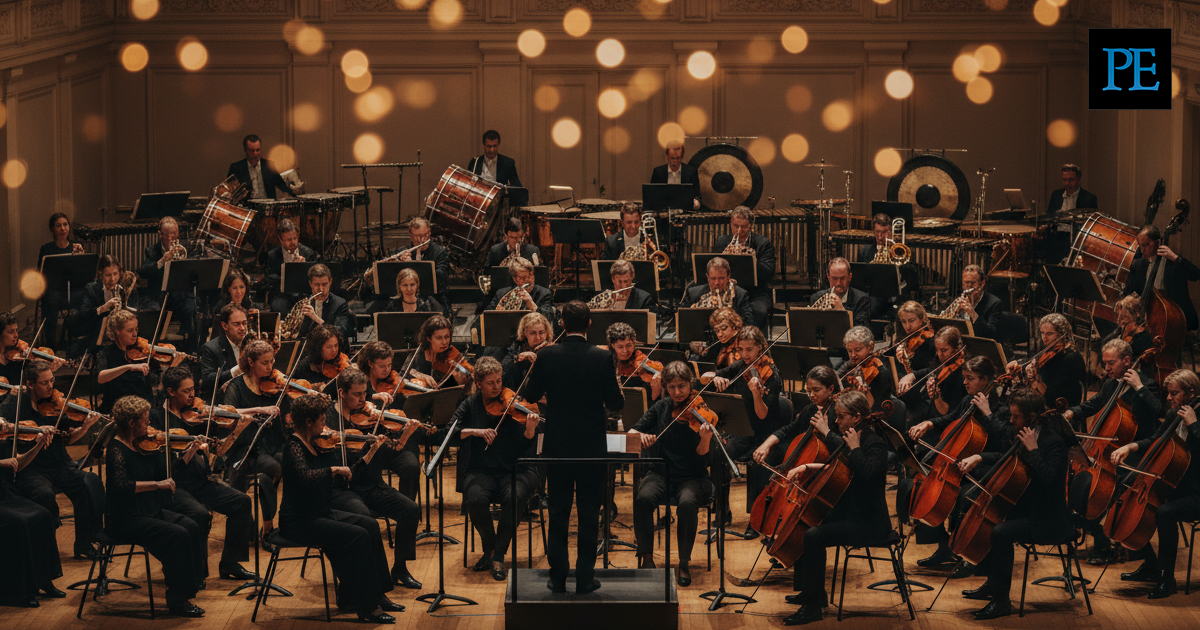
Pruden put Russell Square aside for almost twenty years, after which time he re-worked it as a piece for small orchestra under the title Akaroa (1974). This work is essentially a transcription of Russell Square, with an introduction and coda, and a contrapuntal middle section in place of the original improvised section.