Rebirth is a setting for viola and orchestra of an earlier work (1990) for viola and prerecorded audio titled The Mega4 Meta4. The original work was commissioned by violist Douglas Perry with funds from the Ontario Arts Council and recorded on CD by Steven Dann. One of the most dynamic works of my early composing period, The Mega4 Meta4 did not enjoy an extensive presence on the concert stage, at least compared to some of my more recent works: few violists could rise to the technical demands of the piece and usually these players were not accustomed to performing mixed media works. In 2001 Steven Dann asked me to consider rethinking The Mega4 Meta4 as a piece for viola and orchestra, pointing out the fact that most of the tape part in the original work was "orchestral sounding" in the first place. Rebirth is the result of this rethinking.
The title of the new composition refers to the process that brought it into being, but also to the structure of the original mixed media piece. The Mega4 Meta4 was meant to be the concluding composition of a pentalogy of mixed media works called Earthrise. The material was all borrowed from the preceding four works in the pentalogy and from Albinoni's well-known Adagio for Organ and Strings in G minor. It was never intended as a stand-alone work but as the last chapter of a book, if you like. Its eclecticism, reflected in both its compositional material and its structure, was defended at the time by virtue of the work's position in this larger group. In retrospect, however, the work sounded just fine on its own with no need for connection with its original borrowings. I realize now that The Mega4 Meta4 was an important station in my own spiritual evolution towards less control of compositional material and foreground structure and it was an early evidence of an approach to composition which was to blossom during the following decade and beyond.
I began composing the original work a few days after the tragic events of Tiananmen Square in Beijing during the late 1980s. The "Chinese-sounding" opening melody which comes back at the end of the work (as well as the gun shots and screams of pain) were a conscious effort on my part to reflect on these events. In the intervening twenty years or so, China has radically transformed itself into one of the most exciting countries in the world fraught with danger but also with great promise. This renewed sense of promise and hope is reflected in the orchestration of the concluding part of the work. The celebratory orchestration of the closing section calls for a multitude of bells and wind chimes as well as an erhu and a Chinese flute to bring this overt reference to life.
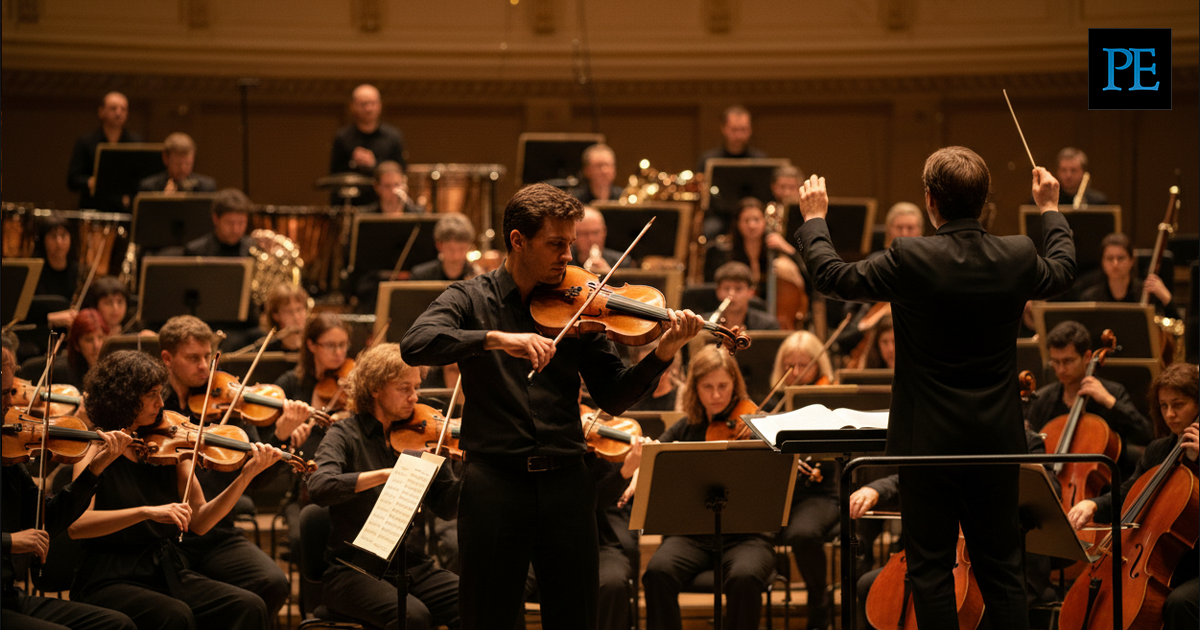
"Translating" an electroacoustic part with its considerable timbral and rhythmic complexity into an orchestral equivalent was not without its challenges. It required a full-size orchestra with a large percussion section to accommodate the extensive timbral language of the original but also the agility and tightness of a small dance band that could make possible the overlaying of micro-rhythmic structures that feel as if on the brink of "derailment" in actual performance. The result is a kind of orchestration that shifts without a moment?s notice between small and intimate "chamber music" and overwhelming orchestral assaults with the soloist caught in between these violent mood swings of the orchestra. The principal players of each string section are occasionally given extensive solo material, and the members of the percussion section are at times soloists in their own right. If it were not for the excruciatingly difficult part for the viola soloist, the entire work could have been easily thought of as a concerto for orchestra. Rebirth is a tribute to the wonderful artistry of Steven Dann and is dedicated to him.