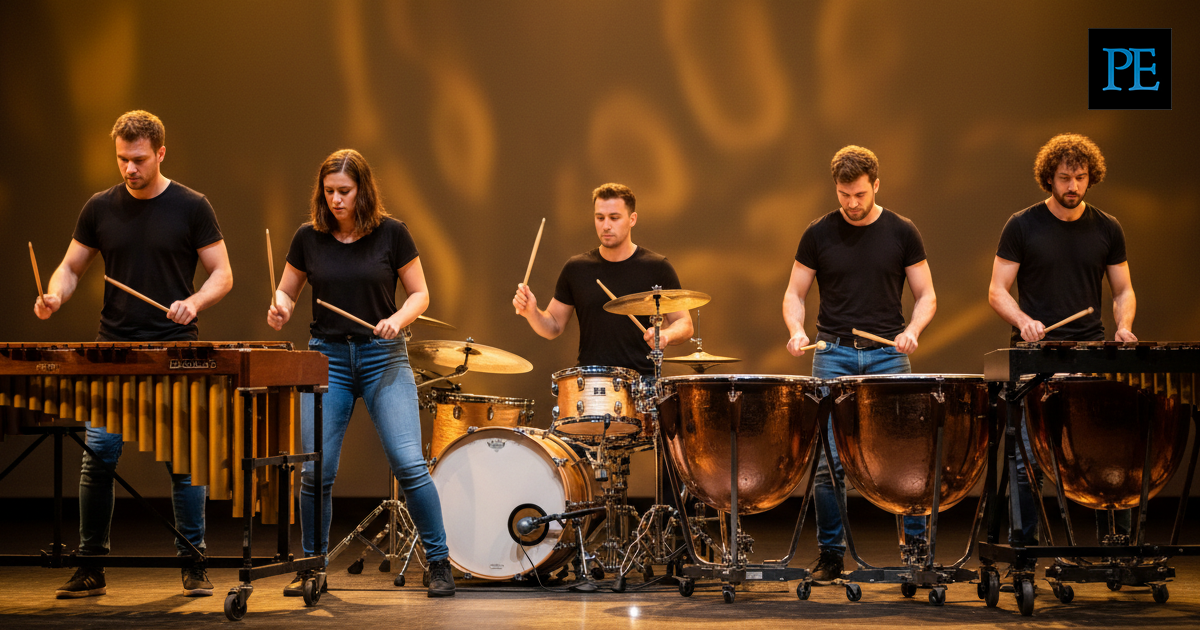
Pukul was written for percussion ensemble, STRIKE, and is a follow-up to the composer's work for percussion quartet, Volume Pig (PE010). The piece draws inspiration from a variety of influences including the percussion music of Bali and the Cook Islands, and rock music. In order to exhibit the expert capabilities of STRIKE, Pukul is intentionally virtuosic in character.
In Indonesian 'pukul' means 'to strike,' and the work begins with a long cadenza which is inspired by the Balinese performing style known as 'kebyar.' The complexity of the kebyar-inspired mix of erratic rhythms and radical dynamic contrasts becomes apparent when represented in Western notation. The succeeding section sees the introduction of a constant crotchet pulse which drives the work forward with the intensity and spirit of Cook Island drumming. However, the pulse eventually becomes obscured and - in the composer's words, trips over itself - due to the occasional insertion of 3/4 and 5/4 measures. A slower section follows which features two percussionists performing interlocking patterns on the brake drums and quirky melodies on the flowerpots. The culmination of the work sees a recapitulation of the frenzied rhythms displayed at the outset of the piece.
Pukul is the piece I'd wanted to write for years, after my epiphany of discovering Balinese gamelan music in the late 80s. I made many pilgrimages to Bali to hear the incredible music there, and was blown away by the complexity of the rhythms that the musicians were able to perform. I got totally hooked, particularly on the bombastic playing style called kebyar, which is a sort of relentless explosion of unpredictable rhythmic patterns. Seeing an ensemble of 25 people playing these types of patterns in perfect rhythmic unison often leaves the audience completely baffled.
At the time, there was no Balinese ensemble in New Zealand, so I started trying to bring these rhythms into my works for Western instruments. However, I quickly discovered that the complexity of the rhythms meant that very few Western musicians could actually play them. So, due to the phenomenal capabilities of the STRIKE percussionists, Pukul is the first time I've been able to write in this style.