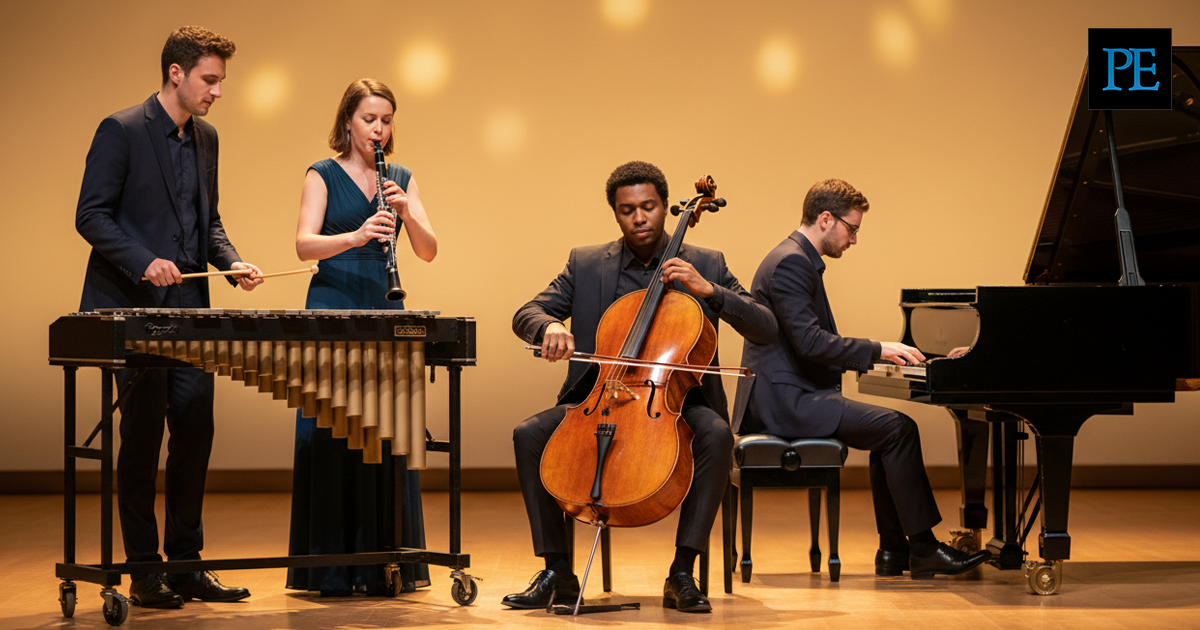
Hatzis considers Parlor Music to be a part of the collection of the same name, a group of concert works for small chamber ensembles drawing on early 20th-century music forms. The name refers to the 19th and early 20th-century tradition in which amateur musicians performed short populist works in private for the entertainment of family and friends. Works in the group draw on music idioms of that period.
Parlor Music is a dance piece with clear references to Astor Piazzola and mid-20th century jazz, among other things. There are two predominant moods in the piece; in the first half there is melancholy and introspection, like with the woman in the beautiful drawing by Louisa Varalta by the same title. Here the dance movement becomes at times almost completely internalized, particularly where the vibraphone, with its evocative pitch bends, and the accompanying music draw the listener inwards. At other times the soft dance rhythms, instead of drawing the dancer to her feet only help to add to the loneliness and stillness of the moment. In the second half, there is a very short musical 'invitation' and the dance suddenly begins. It is still driven by a manic energy rather than pleasure and it ends as abruptly as it began.