Onslaught was commissioned by the New Zealand Army Band to mark the 90th anniversary of the Battle of Gallipoli, which took place during World War I. Three-thousand New Zealand soldiers were part of an amphibious Allied invasion that took place at what is now known as Anzac Cove, on Turkey's Gallipoli Peninsula, on 25 April 1915. Under heavy fire they made their way up the beach in an attempt to divert and prevent Turkish forces from strengthening their defence against the main Allied landing further south at Cape Helles. During an under-resourced and poorly-conducted campaign that would span 260 days, 2,721 of the 8,556 New Zealand soldiers who landed at Anzac Cove perished. Among those that fought were the members of four New Zealand army bands. By the end of the fighting, the casualty rate was such that there was only one band's worth of members left alive.
Onslaught communicates on a strongly physical and visceral level in its portrayal of the intensity and chaos of battle. A sharp military rhythm is immediately recognisable as it is passed around the cornet section, while an ominous sustained chord in the bass register instills dread at what has come. The pounding of artillery is evoked in thunderous, relentless percussion passages while elsewhere syncopated chordal stabs heighten the atmosphere of unpredictability in bursts reminiscent of gunfire. Though the only brief given to Farr was to "write the loudest piece of music in the world", Onslaught does incorporate a degree of light and shade. A subdued and poignant melodic passage at the work's conclusion evokes the battlefield in the aftermath of combat –the loss and futility now made visible.
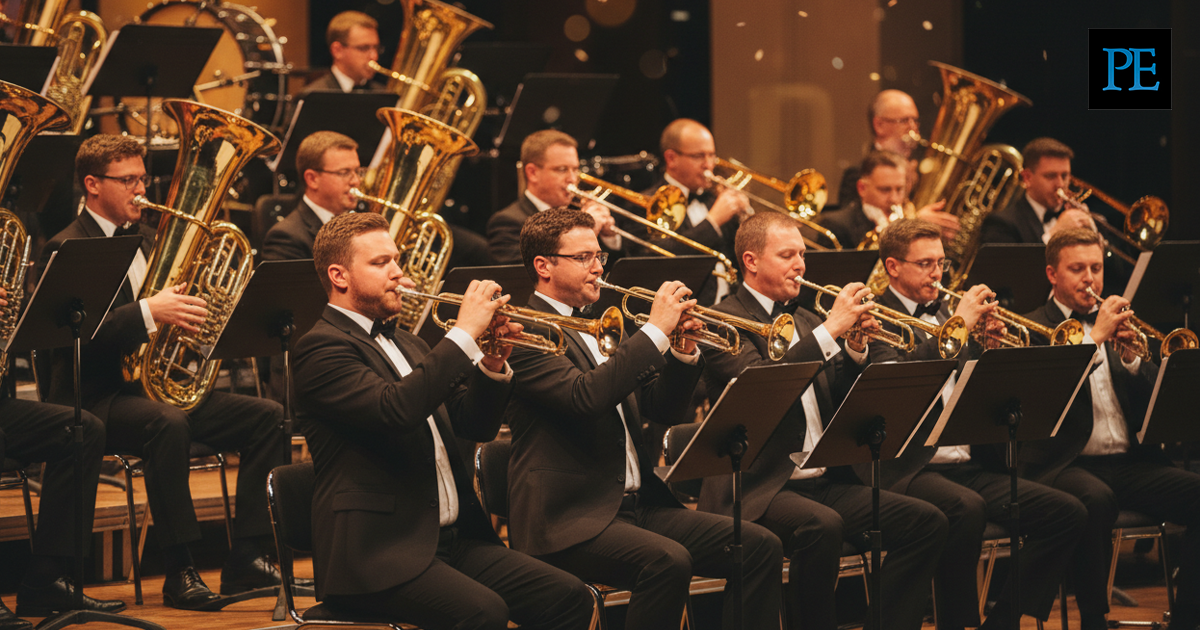
Much of my music is extremely loud and percussive, but almost always in a joyous and celebratory style. Onslaught is certainly loud and percussive, but in a manner that sounds like the end of the world. Despite the work's overall volume there are, however, moments of eerie quiet that express the long periods of time spent in a trench with absolutely nothing happening – there is only the horror of waiting and waiting, knowing something terrible is coming, but not knowing when. Having never played in a brass band, it is always a challenge for me to write for this ensemble. I'm trained to write in orchestral colours and textures, and there is almost no instrumental crossover between the two ensembles. Producing contrasts in tone colour within the brass band is another difficult task, as its instruments are from the same family, but after a lot of consultation with the players I discovered all sorts of ways to achieve it in this piece.