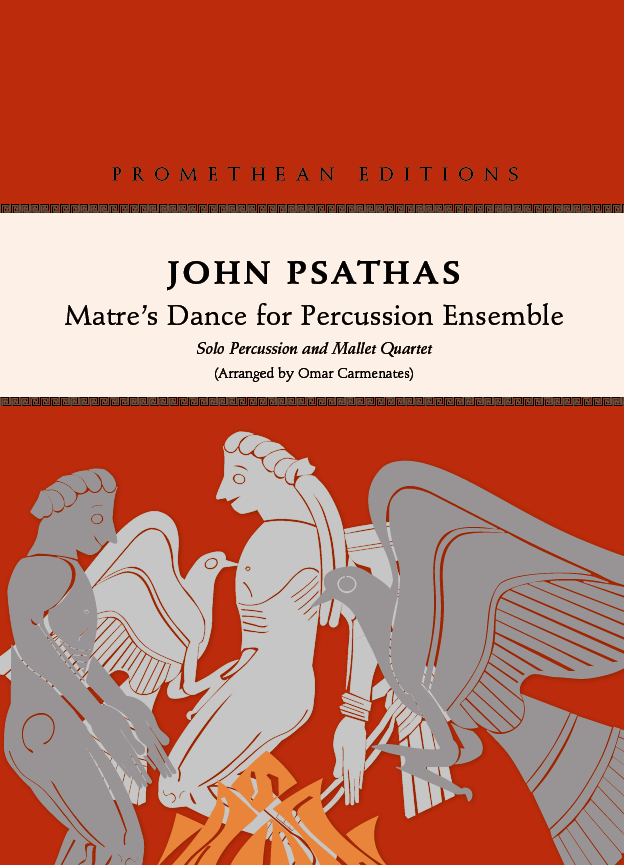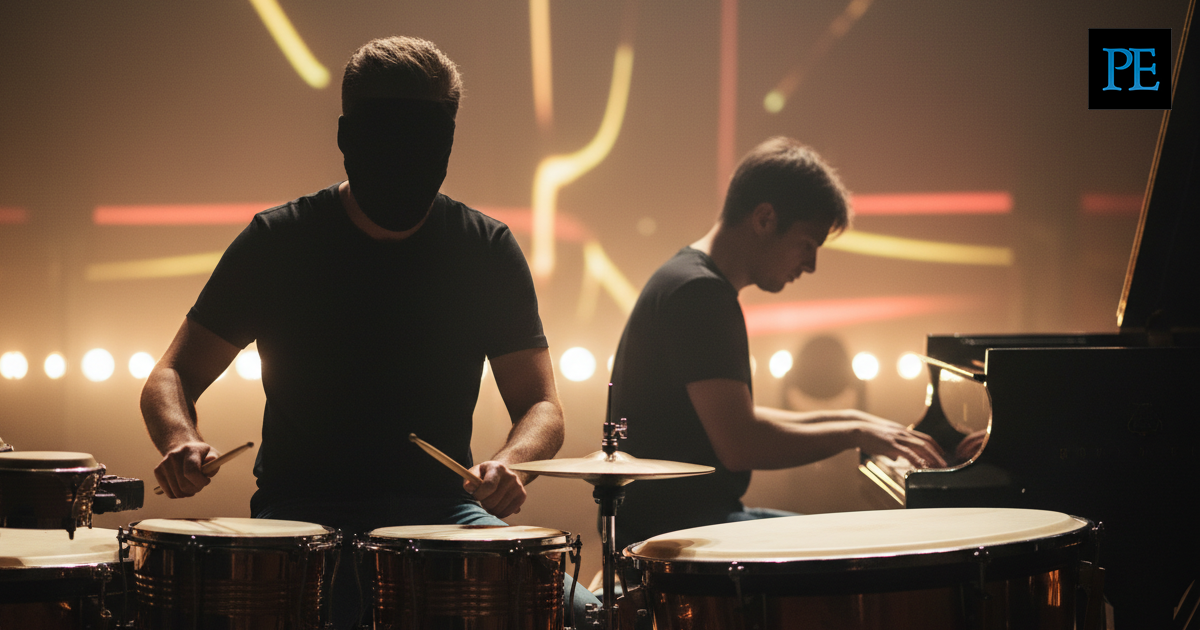
Psathas' Matre's Dance is a standard in the repertoire for piano and percussion. Bursting with the high energy that typifies much of Psathas' work, Matre's Dance maintains relentless rhythmic tension courtesy of unpredictable accents and syncopation. It has received numerous international performances from percussionist Dame Evelyn Glennie, including broadcasts for the BBC, German television and a recording for Glennie's studio albums.
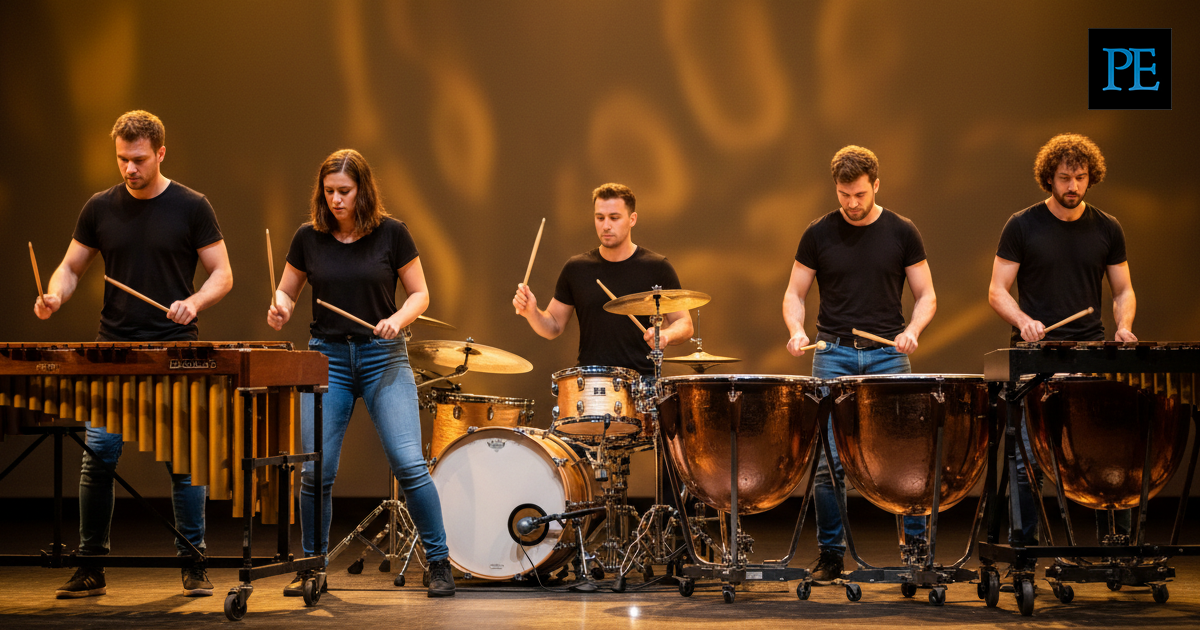
This arrangement by Dr. Omar Carmenates, Associate Professor of Percussion, Furman University, USA, is one of seven works comprising the first volume of The John Psathas Percussion Project, in which works from Psathas' are catalog for the modern percussion ensemble. The technical and syncopated piano part in Matre's Dance (PE027) has been distributed across four mallet players utilising four marimbas, two vibraphones and a xylophone. The solo percussion part remains unchanged from the original version for percussion and piano.
The title refers to a dance performed by a group of fanatics in one of Frank Herbert's Dune books. The dance was non-repeating and exhausting for the dancer, who often collapsed or died before completing the extremely long, complex routine. Created during an intense eight days, and actually commissioned as a violin solo, this was the first piece which suggested to me I might have some future in composing. Following its premiere, Matre's Dance passed from my hands into Evelyn Glennie's and has now seen much more of the world than I will ever manage to.
This arrangement of Matre's Dance for percussion ensemble seeks to maintain the stark colour palette of the original version by keeping the percussion part and primarily utilising wooden keyboard percussion instruments in lieu of the piano. The vibraphone voice is added throughout to bring out melodic lines where precise control of note length is necessary. As such, note lengths and articulation markings should be strictly observed during these sections. However, care should also be taken to blend all keyboard instruments throughout to create a single unified sonority.
Since much of the original piano part exists in the extreme high and low ends of the instrument, numerous accommodations had to be made to fit within the range of keyboard percussion instruments. However, a deliberate attempt was made to capture the tonal character of those unavailable pitches. Unison playing is used extensively in the low register of the marimba to emulate the grit and thickness of the low piano strings and the addition of the xylophone captures of brilliant attack of the highest notes. Any interpretive decisions made by performers to capture these qualities through mallet selection, stage set-up, amplification and more are welcomed.