This work is an arrangement for Percussion Ensemble of Psathas' piano trio Aegean (PE181), written in 2012.
Short and elegant, Aegean is perfect for ensembles wishing to add a dose of romance to a concert programme. The work is inspired in part by the view from the composer's parents' house, which overlooks the Aegean Sea. Psathas' substantial body of relentlessly high-energy works might lead one to assume that, in the case of Aegean, the sea is visualised at its most stormy and tumultuous, the work being pushed forward with tempo surges depicting accelerated ocean currents. Instead, we are presented with a scene in which a calm sea gently rises and falls – the ensemble's odd-metered and softly articulated rhythmic figure evokes the irregular movements of the ocean's surface, while passages that add repeated two-note semiquaver patterns in its upper registers mirror the glistening of sunlight on the water's rippling contours. The peacefulness of Aegean is reinforced by the poise in the writing that decorates the work's unhurried journey. The work becomes bathed in warmth, like the sun emerging from behind a cloud, sending light to play once again on the Aegean's undulating surface.
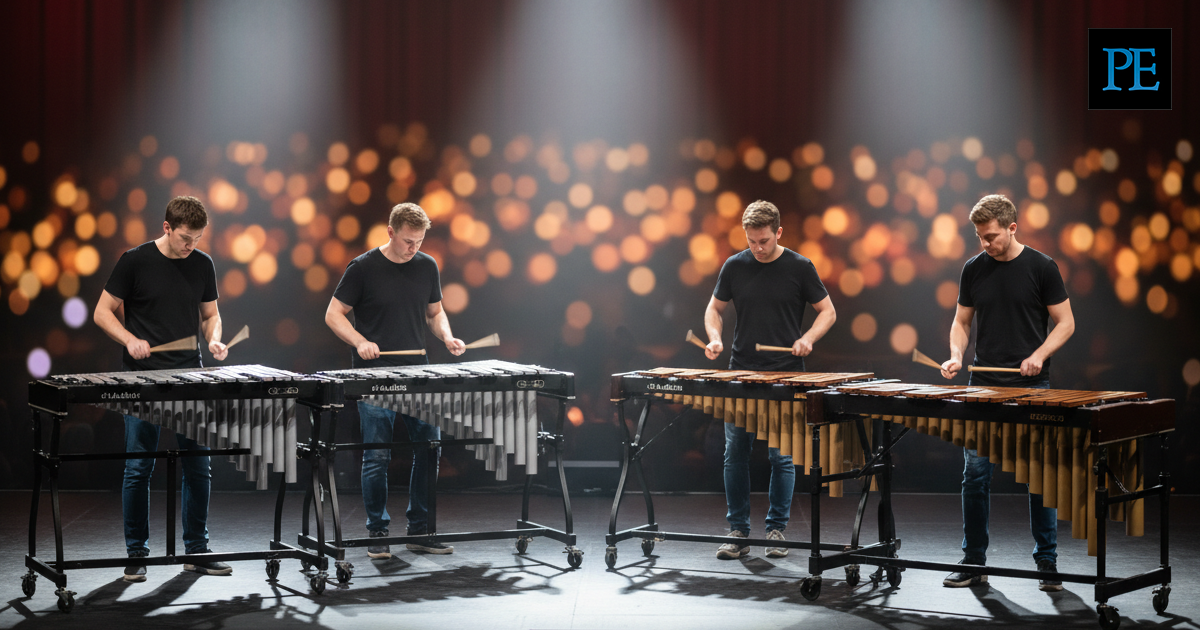
Carmenates makes excellent use of timbre in this arrangement, as the vibraphones' shimmering resonance and the marimbas' warm earthiness readily evoke the aqueous, sunlit contours suggested in the original version.
This arrangement is from a collection of Psathas' works arranged by Carmenates for percussion ensemble entitled The John Psathas Percussion Project.
This arrangement of Aegean, despite its beauty and lyricism, was a challenge to arrange for keyboard instruments in that it flips upside-down a percussionist's usual instincts to bring out the most rhythmically active parts. Almost exclusively, the less active parts are the lead voices here and there should be an intense cooperation amongst the performers to give space to those lines.
I know this work means a lot to John, and I am immensely thankful to him for allowing me to be a steward of this work and all of the others included in the John Psathas Percussion Project.