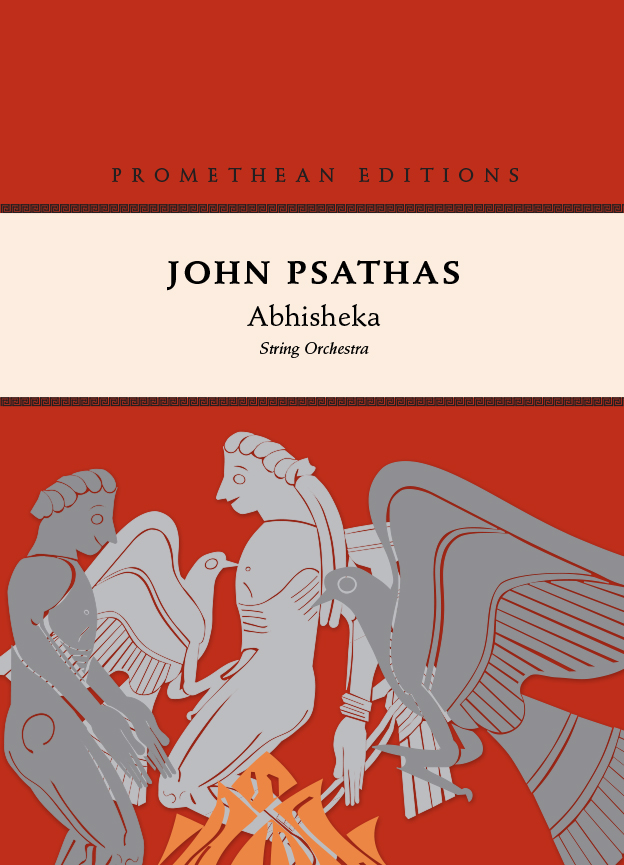
Psathas' highly exotic and intriguing Abhisheka is comprised of periodic, tonally warped swells that gradually contract and expand, while sensual solo lines flicker with microtonal inflections. In its original form, Abhisheka was conceived as a work for string quartet (PE028). This arrangement for string orchestra was made in 2008 subsequent to a suggestion by Auckland Chamber Orchestra Musical Director, Peter Scholes.
Drafted immediately after reading a book by the Buddhist guru Chögyam Trungpa, Abhisheka was my first-ever attempt at writing music with space in it. Until this piece, practically everything I had written was ultra-caffeinated, fast, full of notes, and murder on the performers. But having been (albeit temporarily) inspired by the great truths and peace in Trungpa's writing, I found myself navigating slower passages of musical time, as well as exploring the microcosm of inner space between intervals of our tempered chromatic scale.
"The sanskrit equivalent to 'initiation' is abhisheka, which means 'anointment' or 'to sprinkle or pour'. And if there is pouring, there must be a vessel into which the pouring can fall. So at last we might really give up all these complications and just allow some space, just give in. This is the moment when abhisheka - sprinkling and pouring - really takes place, because we are open and really giving up the whole attempt to do anything, giving up all the busyness and overcrowding.
Finally, we have been forced to really stop properly, which is quite a rare occurrence for us."
Cutting through Spiritual Materialism by Chögyam Trungpa
"This is a mostly slow and reflective piece, beautiful as well as profound. Extensive use of quarter-tones gives it an unusual sound. Against a background of hushed chords, the violins and cello each have an extended solo passage. After a more energetic and unexpectedly intense climax, the viola has its turn. Psathas shows a sure hand in the marriage of material to form and the careful pacing of the work."