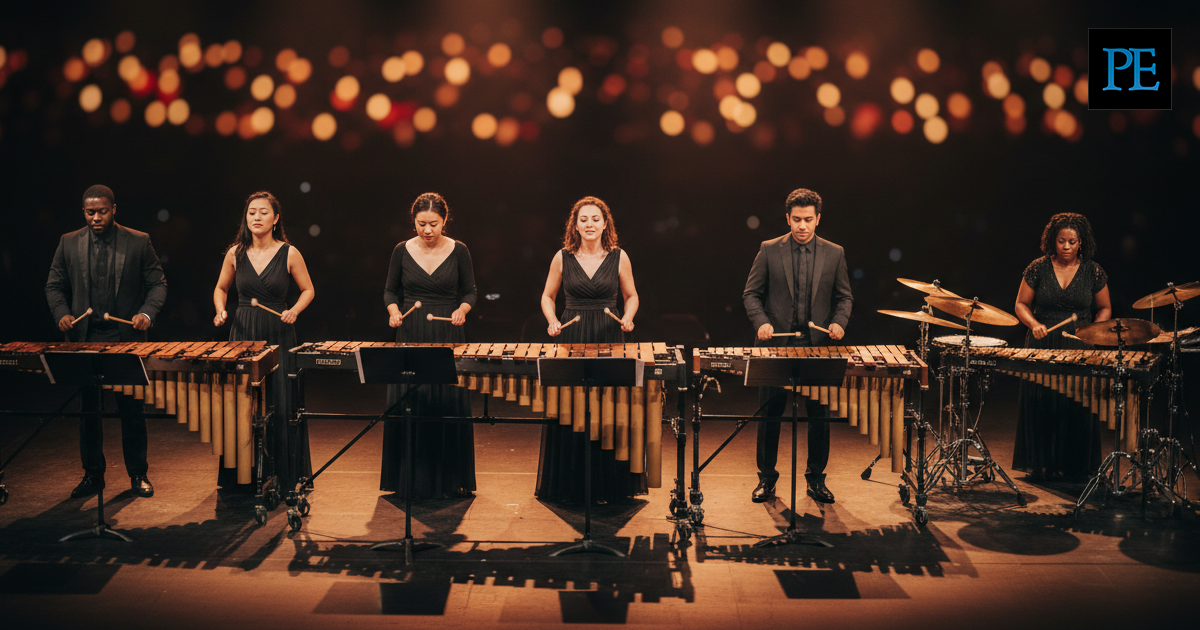
Arranged here for percussion ensemble by Omar Carmenates, Corybas is the first of two companion works Psathas originally wrote for piano trio, the other being Aegean (PE181). The works were commissioned by Ian Graham as a birthday gift for his wife Agi Lehar-Graham (in the original manuscript Psathas adds a little wordplay to the work's title, spelling Aegean as Agi-Ian), and in grateful recognition of the New Zealand Chamber Soloists (NZCS) Piano Trio – Katherine Austin, Lara Hall and James Tennant.
About Corybas for piano trio:
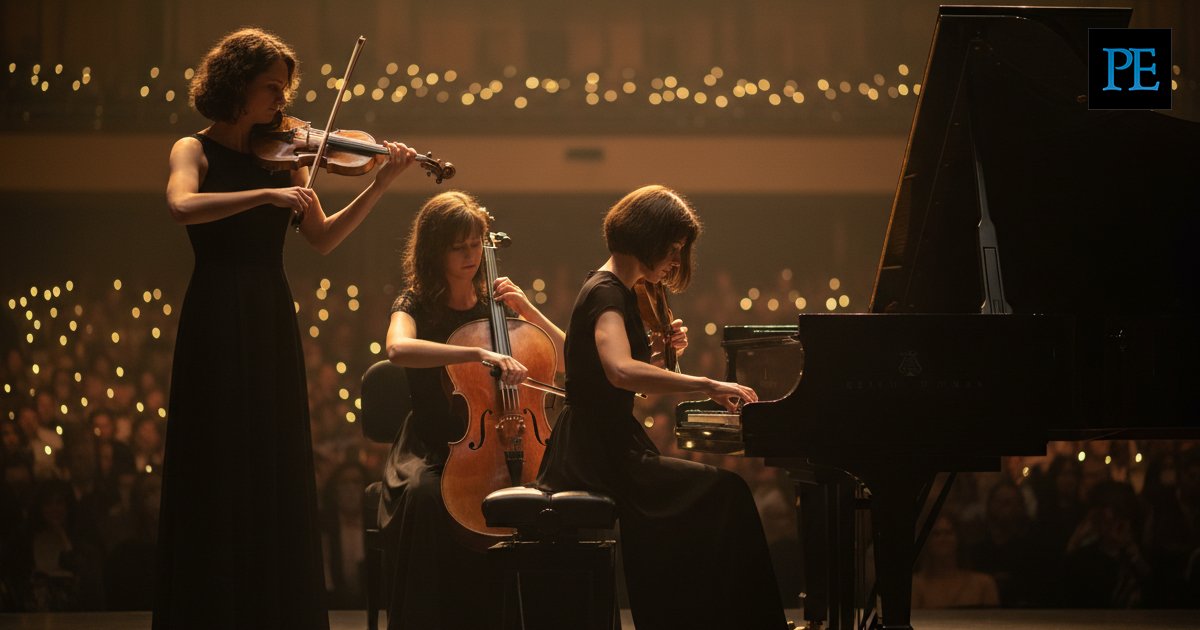
Corybas opens with the unaccompanied piano holding the repetitive odd-metered groove that propels the work. In contrast with the piano's brisk stream of notes, the cello and violin take turns with long, mournful pitches that rise out of, and then sink back into, the piano's texture. The strings then build momentum through fusing their melodic lines with the piano's groove, offering short syncopated accents and uniting for dramatic and thrilling phrases. The cyclic nature of the underlying groove is also realised in Corybas's surges of intensity as the work pushes through a series of climaxes that drop back to a hushed drama, beginning the process over again. With each rising wave, the strings' melodic lines grow more decorative, with the piano opening up to provide thunderous points of arrival in the bass register, and joining the strings in incorporating more decorative flourishes. The underlying groove is toyed with, employing snatches of other metric configurations. Eventually, the successive waves lose their intensity, with the work winding down in a lighter restatement of the opening material, the original groove reimagined in the piano's upper register.
An exciting aspect of writing Corybas was getting my head around a particular dance groove found in Macedonia, which is in 17/8 time but divided into measures of 7/8, 6/8, and 4/8. It's a fantastic groove but it takes some work to internalise it. I had to play with this groove in a way that would keep performers from going crazy because of the amount of variation and syncopation on top the 17/8 meter, otherwise the material would be stressful and unsatisfying to play instead of exciting. I'm very happy about Corybas because I think I got the balance right in this respect. Once performers internalise the underlying meter I see a transformation take place and they love to play it.