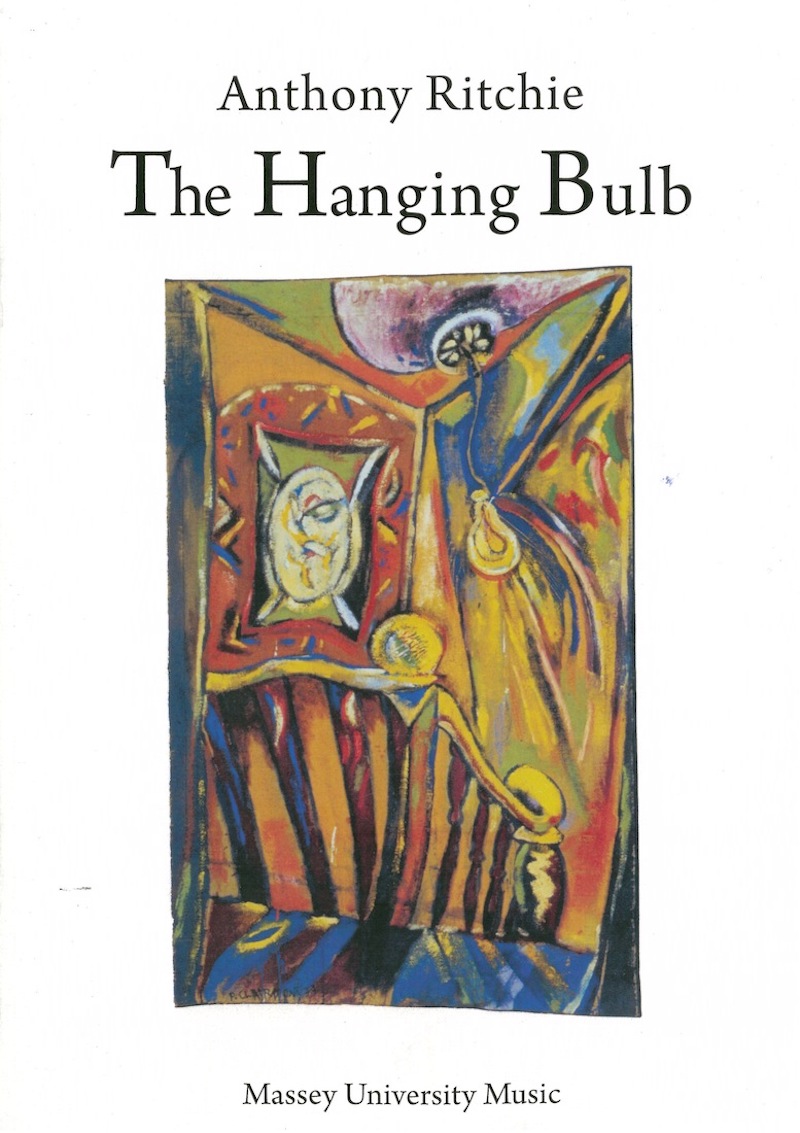
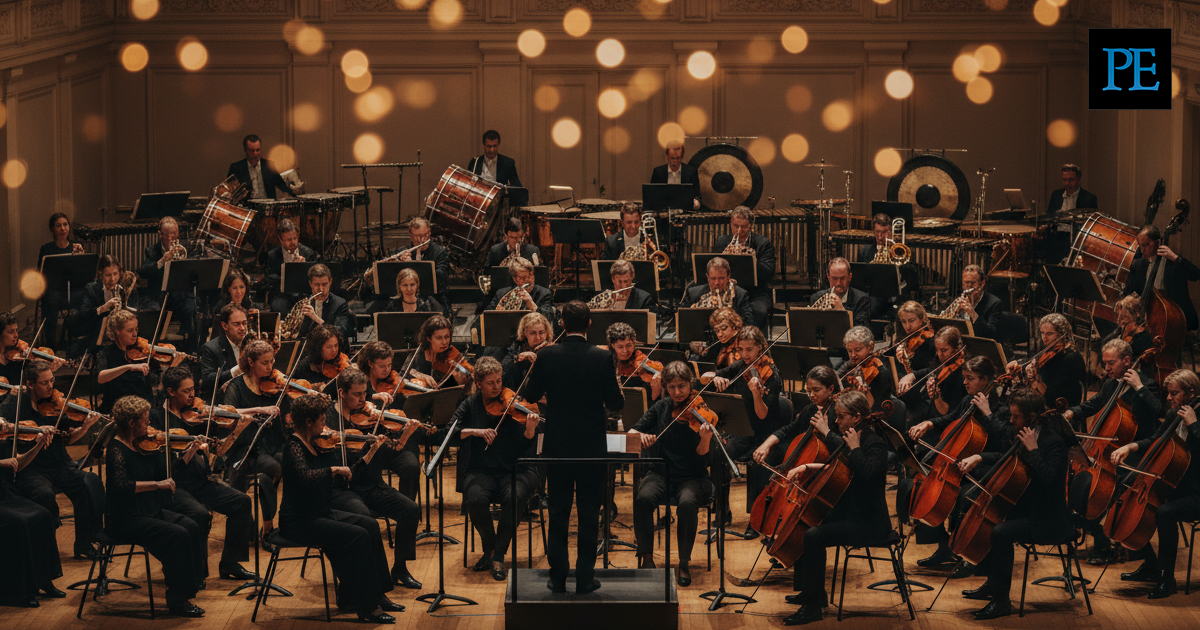
The Hanging Bulb was commissioned by the Dunedin Sinfonia while I was Mozart Fellow at Otago University. It consists of a continuous movement, divided into four sections: slow, fast, slow, fast. The first and second sections are thematically related, as are the third and fourth sections, so the structure could be described as a double couplet. The work expresses particular emotional and psychological states of mind, encapsulated in the title, which is an image of despair. Hanging light bulbs have been associated with despair and obsession in the world of art and in the real world. They became a significant image to me at the time of writing this piece, which was not born in happy circumstances. Tension in the music is created through extensive use of the octatonic scale, bimodal effects and thickly layered chords (such as occur near the end). The xylophone and bass drum are used as symbols of cruelty, while the piano has an important "personal" statement in the first section. The last section has an obsessional quality that is expressed through repeated rhythms and motifs.