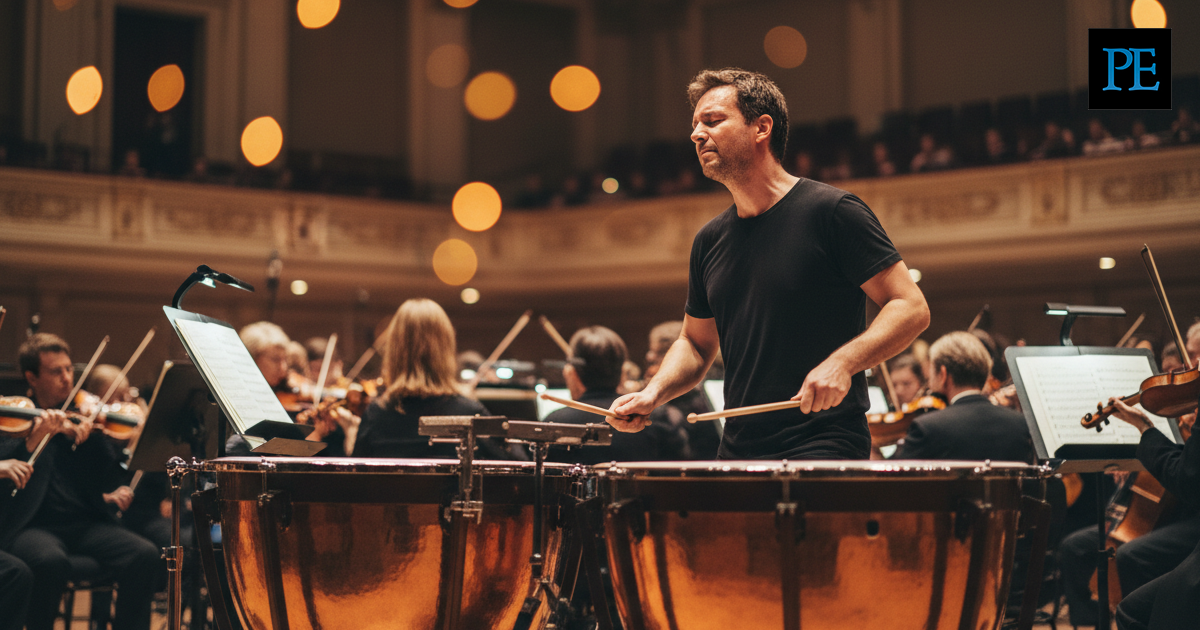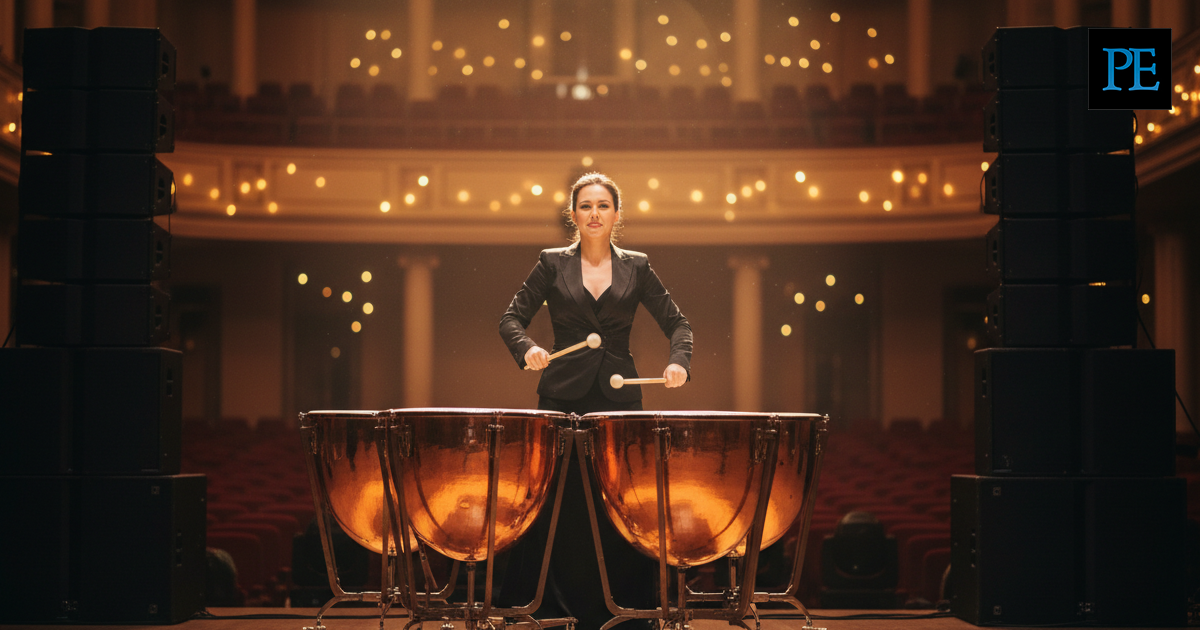
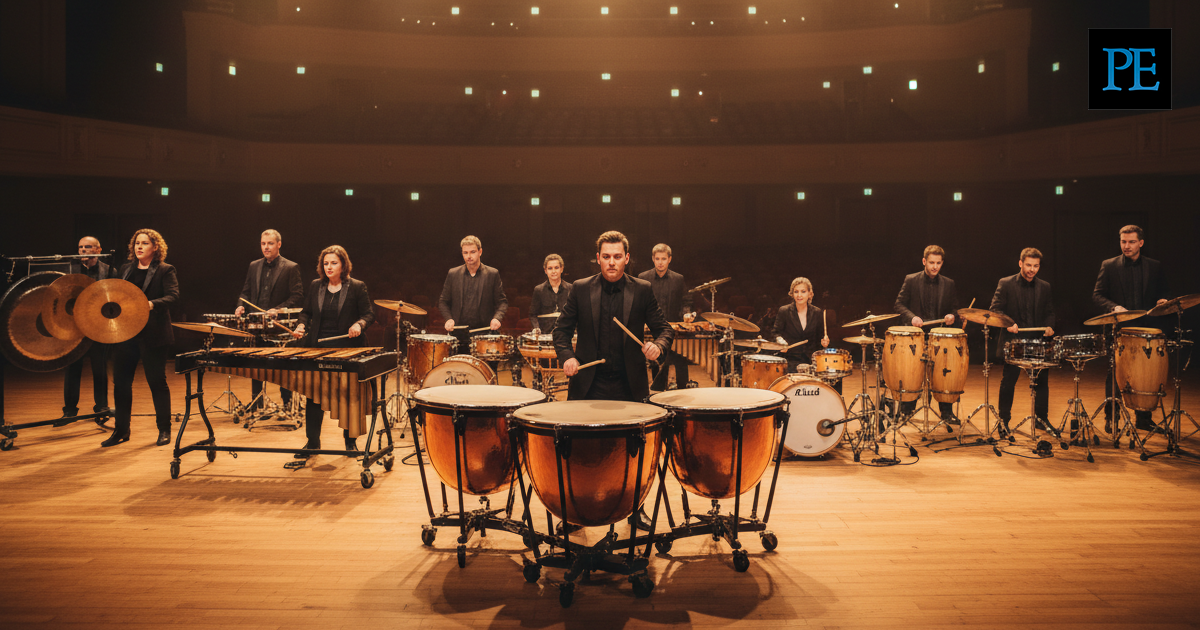
Planet Damnation was originally conceived as a work for solo timpani and orchestra. This edition of the work, for percussion ensemble, was arranged by Dr. Omar Carmenates, Associate Professor of Percussion at Furman University, USA. A version for solo timpani and digital audio (PE172) is also available.
Allured by the potential of the timpani to facilitate both rhythmically elaborate and melodically expressive writing, Psathas exhausts the entire spectrum of the instrument's capabilities in Planet Damnation, and Carmenates complements Psathas' broad scope by throwing a 13-piece percussion ensemble behind the timpanist in his arrangement. Four marimba and three vibraphones articulate the rhythmic complexity that propels the work forward, employing exciting interlocking rhythms and insistent pulses. Elsewhere, bowed keys and tension-inducing rolls provide a baleful backdrop for the timpanist's statements. A full complement of auxiliary percussion is also on hand; ominous rototom and bass drum material supports the timpani's pounding rhythms, while the use of piccolo and concert snare drums retain the subtle references to martial music found in the work's original version.
One of the characteristics of the orchestral version of Planet Damnation that I find so engaging is the superimposition of driving rhythmic figures, particularly in the strings and solo timpani, against sustaining textures that range from lush woodwind chords to brutal brass swells. It became very obvious early in the arranging process that this key ingredient would also be the biggest challenge in translating Planet Damnation to keyboard percussion instruments due to their inherent lack of ability to sustain a note. As percussionists, we often disguise this shortcoming by using a hand-to-hand tremolo, or "roll", to mimic a sustain. While that technique is used extensively in this arrangement, I also tried to expand the palette of sustaining options available by also incorporating bowed vibraphone/crotales or by rewriting longer sustaining textures into thickly layered molto sostenuto 16th-notes in the marimbas. It is my hope that these varieties of techniques augment the already impressive colors that Psathas employs in the orchestral version of this piece.