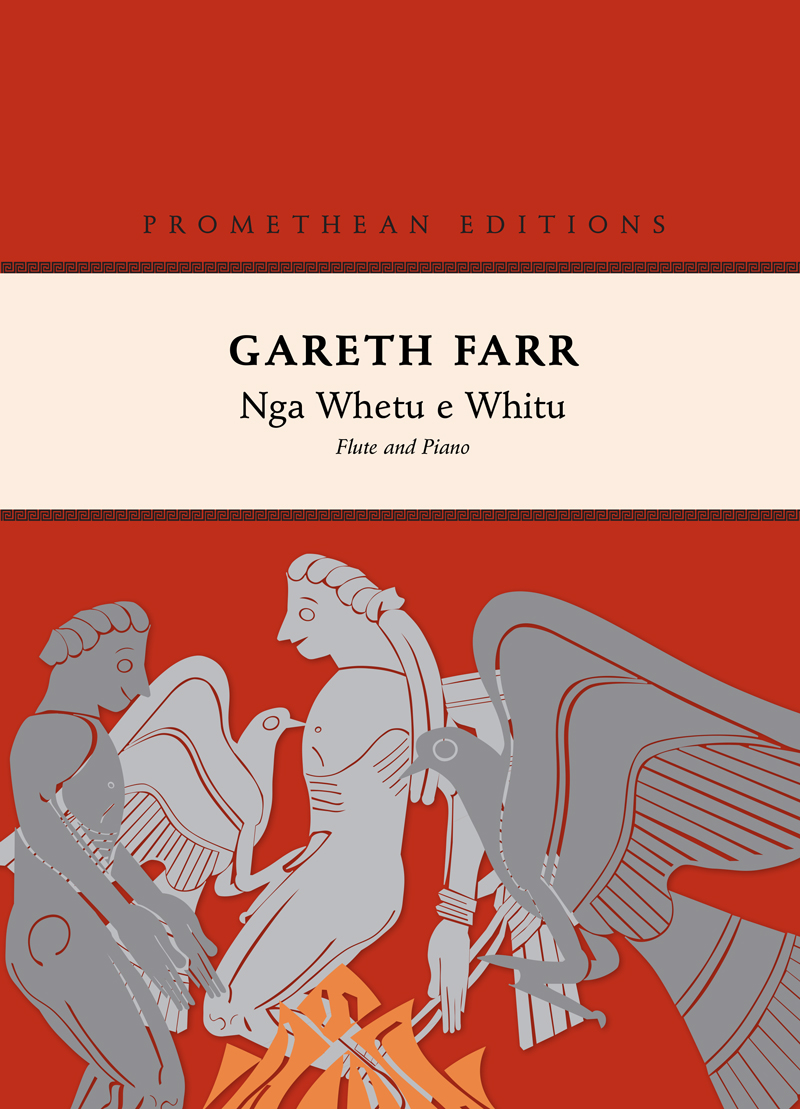
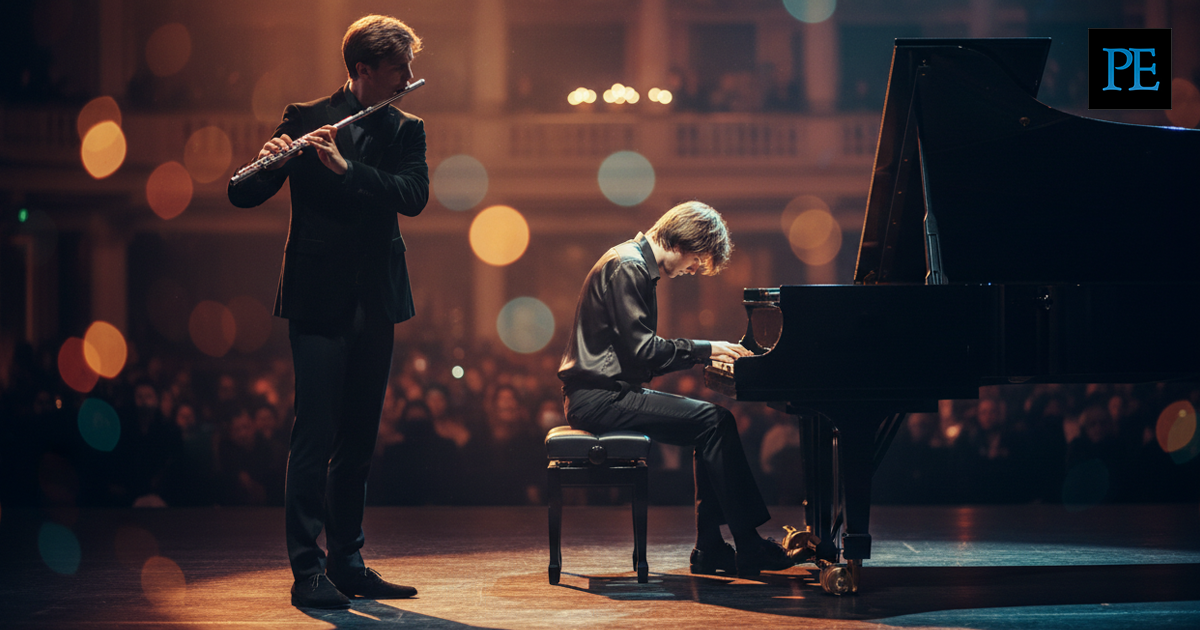
Shifting between haunting and dextrous, Nga Whetu e Whitu is a captivating and challenging duo performance piece. Farr cites the tonal and harmonic devices of Messiaen as an influence in writing Nga Whetu e Whitu, and this is evident in the nocturnal stillness of the solo piano in the opening moments. The chromatic shadings of the work are brought into sharp relief as the flute enters with a winding lyrical passage, soon leading into faster, swirling lines that are passed between the two instruments. The wave-like contours contract into quivering trills and expand into grand sweeps before the movement eventually settles, reprising the dark tranquility of its beginning. The shorter, more overtly rhythmic second movement picks up from the more turbulent material of the first movement, galloping through its lively interplay in compound meter.
The title of the work is a reference to Matariki, the Maori name for both the Pleiades star cluster and the time of year in which it first rises over New Zealand (late May to early June), marking the start of a new year. Matariki was also a valuable star cluster for navigation and an indicator of seasonal change, marking the time to begin preparing soil for planting.